Saltwater is patient. It does not need to break a material in a single dramatic moment. It works slowly through spray, humidity, deposits, crevices, heat, oxygen changes, and time. A fitting that looked clean in the catalog can begin to pit. A fastener can seize. A tube can lose wall thickness where no one can see it.
In marine and coastal environments, durability is not a claim; it is something the material must prove every day. This is where titanium earns its reputation.
Why Marine and Coastal Environments Are So Demanding
Saltwater is patient. It does not need to break a material in a single dramatic moment. It works slowly through spray, humidity, deposits, crevices, heat, oxygen changes, and time. A fitting that looked clean in the catalog can begin to pit. A fastener can seize. A tube can lose wall thickness where no one can see it.
In marine and coastal environments, durability is not a claim; it is something the material must prove every day. This is where titanium earns its reputation.
Seawater is not simply water with salt added. It is a complex electrolyte containing chlorides, oxygen, microorganisms, suspended solids, and changing temperatures. These factors make corrosion more aggressive and less predictable.
Many common metals depend on protective films or alloying elements to resist corrosion. Under stagnant zones, scratches, crevices, high temperature, or heavy chloride exposure, those defenses can fail locally. Once local corrosion begins, it may progress faster than the surface appearance suggests.
Saltwater Raises the Standard
Titanium resists corrosion because it forms a very stable oxide film on its surface. This film is thin, adherent, and self-healing in the presence of oxygen. If the surface is scratched, the oxide layer can reform quickly under normal conditions.
In chloride environments, that behavior is especially valuable. Titanium is highly resistant to seawater corrosion at ambient temperatures and is widely used in equipment where stainless steels may suffer from pitting or crevice attack.
Seawater heat exchangers are among the clearest examples of titanium's value. Tubes in these systems must transfer heat while resisting constant contact with chloride-rich water. If corrosion leads to leakage, the cost is not limited to replacing tubes. It can include shutdowns, contamination, cleaning, and emergency maintenance.
Titanium tubes are widely used in condensers, desalination equipment, aquaculture systems, offshore platforms, and chemical plants that rely on seawater cooling. In desalination, where salt, heat, and continuous operation meet, long service life is central to the economics of the system.
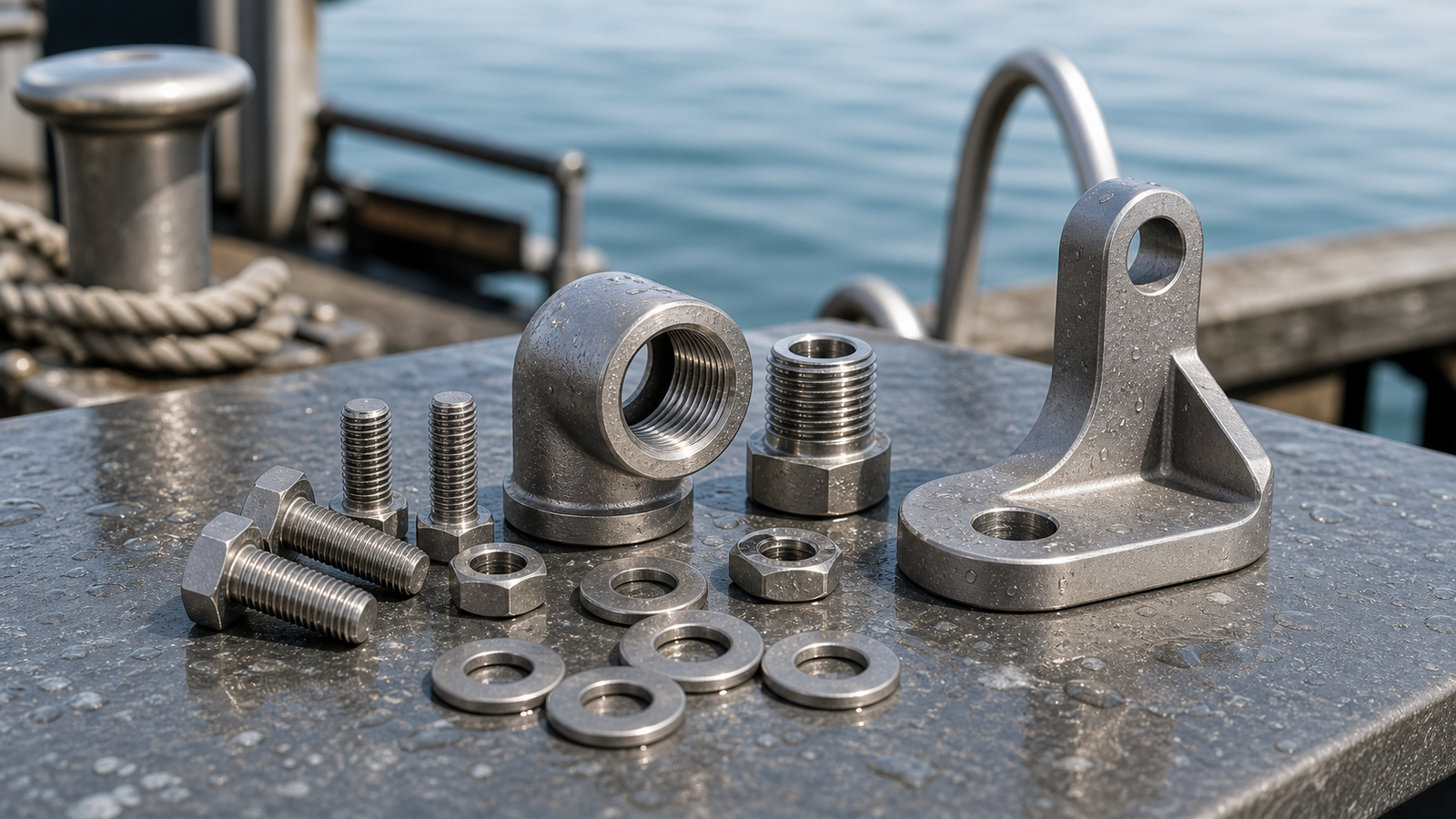
Large equipment often fails because of small parts. Bolts, washers, clamps, flanges, and fittings may be less visible than major components, but they experience the same environment and sometimes face worse crevice conditions.
Titanium fasteners can be useful in marine assemblies because they resist rust and remain serviceable over time. They are also lightweight and strong, which matters in offshore equipment, vessels, and portable marine systems.
How Titanium Helps, and Why Design Still Matters
Titanium usually costs more upfront than common stainless steels or aluminum alloys. The decision becomes rational when the cost of failure, maintenance, downtime, replacement, and inspection is included.
If a part sits inside a critical system, faces continuous seawater exposure, or requires expensive shutdowns to service, a material that lasts longer may be the more practical choice even when the purchase price is higher.
Marine and coastal environments punish materials slowly and thoroughly. Titanium belongs in this conversation because it brings corrosion resistance, strength, low weight, and long service life into places where ordinary metals often struggle.
Titanium performs extremely well in many marine environments, but good design remains essential. Crevices, stagnant zones, deposits, and mixed-metal contact can create conditions that deserve engineering attention. A material may be corrosion resistant and still be used poorly if the assembly traps contaminants or makes cleaning impossible.
Where Titanium Earns Its Place
For marine hardware, designers should consider drainage, oxygen access, surface finish, fastener selection, gasket materials, and maintenance access. Titanium's protective oxide film performs best when the environment allows it to remain stable. In many seawater systems that is not difficult, but it should be part of the design conversation rather than an assumption made after the drawings are finished.
When different metals are connected in a conductive environment such as seawater, galvanic corrosion can become a concern. Titanium is noble compared with many common metals, which means nearby aluminum, carbon steel, or some other alloys may need protection depending on the assembly. The titanium part may survive, while a neighboring part becomes the weak link.
This does not mean titanium should be avoided. It means the whole system should be reviewed. Insulating washers, compatible fasteners, coatings on less noble metals, cathodic protection, and thoughtful material pairing can all help. Marine equipment is rarely a single material problem. It is a system problem.
Fasteners and Fittings
Titanium is especially attractive in seawater heat exchangers, desalination equipment, pump components, valve parts, fasteners, offshore instrumentation, aquaculture systems, and coastal installations exposed to salt mist. These applications share one thing: maintenance access is often difficult, and corrosion failure can be expensive.
In coastal architecture or public infrastructure, titanium may be considered for brackets, exposed fittings, or components where appearance and long service life both matter. In industrial systems, titanium may protect uptime. In marine research or offshore equipment, low weight and corrosion resistance can help reduce handling burdens while improving reliability.
Marine and coastal buyers should be clear about grade, standard, dimensions, surface condition, testing, and documentation. For tubing, pressure or eddy current testing may be relevant. For fasteners, thread quality and mechanical properties matter. For machined parts, tolerance, surface finish, and traceability should be confirmed before production.
A material test certificate helps connect the product to its chemistry and mechanical properties. For critical systems, heat number traceability is important. If the part will be installed in a regulated facility or exported as part of larger equipment, documentation can be as important as the metal itself.
Applications, Installation, and Maintenance Planning
Titanium's higher upfront cost can be difficult to justify if only the purchase price is considered. The better question is how often the part would otherwise be replaced, how hard it is to access, and what happens if it fails. A low-cost component inside a seawater system may become very expensive if it causes downtime or contamination.
In this sense, titanium is often a lifecycle decision. It makes sense not because it is exotic, but because the environment is unforgiving. Saltwater is patient, and the material must be patient too.
The best marine material choices rarely call attention to themselves. They simply reduce problems. Titanium belongs in marine and coastal equipment because it brings a calm resistance to environments that make many other metals work too hard. Used with good design and proper documentation, it helps equipment last longer in places where failure is never convenient.
Check the Whole Assembly
Even with titanium, coastal equipment should be inspected on a sensible schedule. Salt deposits, dirt, biological growth, and contact with other metals can affect the whole assembly. Routine rinsing, visual checks, and fastener inspection help keep small issues from becoming larger maintenance tasks.
The advantage of titanium is that maintenance often becomes simpler and less urgent. Instead of fighting constant rust, operators can focus on the condition of the full system. That practical reduction in maintenance pressure is one of the reasons titanium is valued in demanding coastal environments.
For project managers, the best time to discuss titanium is before the equipment is built, not after corrosion problems appear. Early material review gives engineers more freedom to design reliable assemblies and avoid costly retrofits.
Marine engineers know that seawater conditions vary widely. Temperature, oxygen level, flow velocity, biological activity, sand content, pollution, and stagnant zones can all change corrosion behavior. Equipment in warm tropical seawater may face different challenges from equipment in cold coastal water. A splash zone may be more demanding than continuous immersion because wet-dry cycles concentrate salts.
Surface and Crevice Details
This is why material selection should be based on the actual service environment. Titanium has excellent seawater resistance in many conditions, but engineers should still review temperature, flow, crevice risk, and contact with other metals. Good material selection begins with a realistic description of the operating conditions.
Marine equipment often deals with biological growth, sediment, and mineral deposits. These may not attack titanium directly, but they can reduce heat transfer, restrict flow, create under-deposit environments, and increase cleaning needs. A corrosion-resistant tube or fitting still belongs to a system that must remain clean enough to function.
Designers should consider access for cleaning, suitable flow rates, filtration, and maintenance intervals. Operators should avoid assuming that corrosion resistance eliminates operational care. Titanium helps protect the material, but performance still depends on the cleanliness and design of the equipment.
Fasteners are small, but in marine service they can determine whether maintenance is easy or miserable. Rusted or seized bolts can turn a simple inspection into a repair project. Titanium fasteners resist corrosion and can reduce weight, but they must be selected with the surrounding materials in mind.
Maintenance Planning
Thread design, lubrication, preload, galling prevention, and galvanic isolation may all be relevant. A titanium bolt installed into an incompatible assembly without proper planning may protect itself while creating risk elsewhere. The best fastener choice considers the full joint, not only the bolt material.
Titanium is often discussed in industrial marine systems, but coastal architecture also benefits from corrosion-resistant materials. Railings, brackets, panels, anchors, decorative elements, and exposed hardware near the ocean face salt mist and humidity. Maintenance can be expensive, especially on tall buildings, bridges, hotels, ports, and public facilities.
In these applications, titanium may be chosen for a combination of appearance and long service life. It can maintain a clean surface without the rust staining that affects many common metals. The decision must still consider budget, structural design, and compatibility with other materials, but the lifecycle argument can be strong where access is difficult.
Buyer Checks: Traceability, Compatibility, and Lifecycle Cost
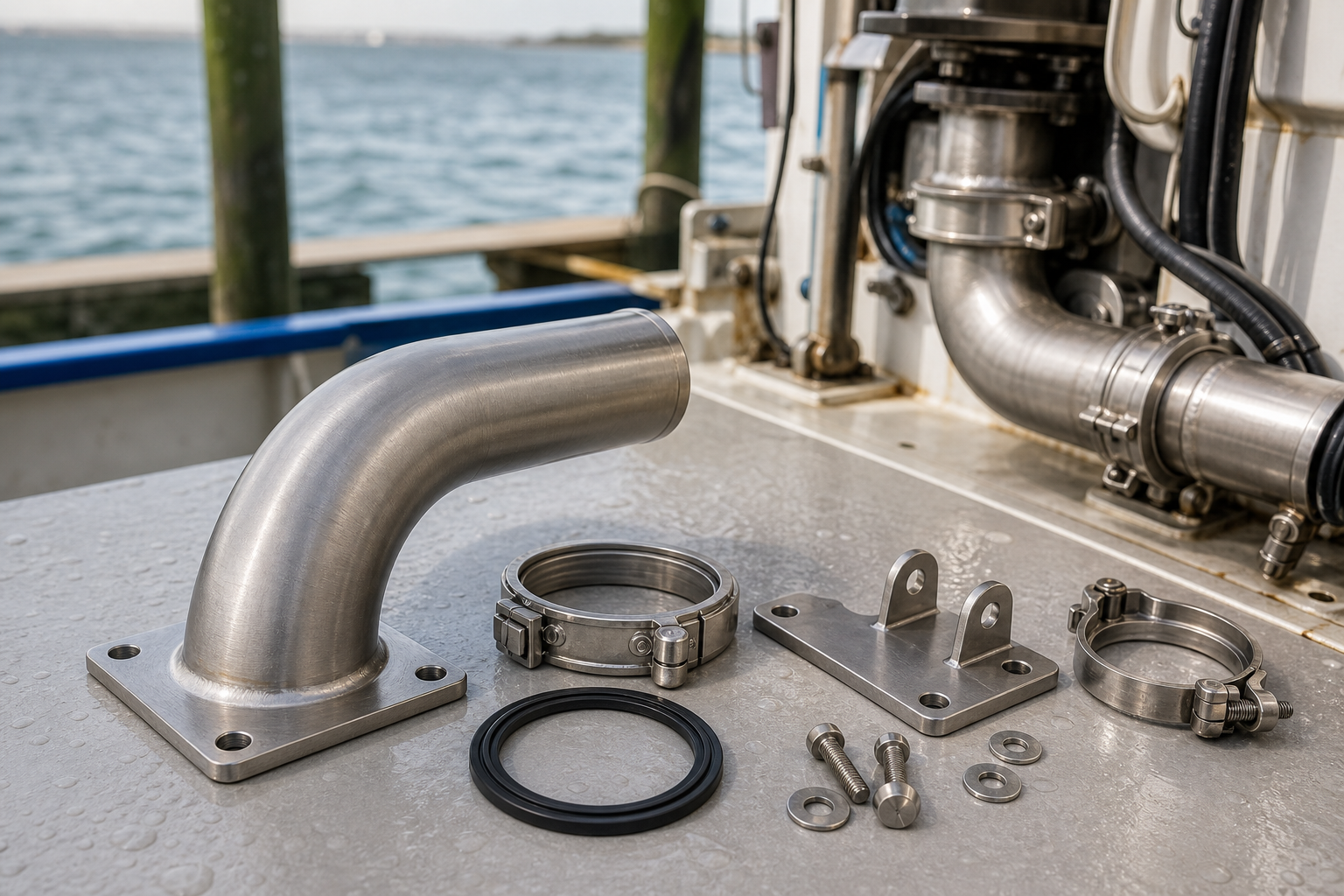
For marine heat exchangers, desalination plants, offshore equipment, and chemical systems, traceability is essential. Buyers should know the grade, standard, heat number, test results, and manufacturing route for critical titanium parts. If a problem occurs years later, traceability helps engineers understand what was installed and how it was certified.
Suppliers should provide clear certificates and markings that match the delivered goods. This is not paperwork for its own sake. In marine projects, documentation supports safety, maintenance planning, and accountability.
Long service life does not mean no replacement planning. Even titanium components may need inspection, cleaning, or replacement depending on mechanical wear, impact, design changes, or system upgrades. Good equipment planning includes spare parts, access points, and records of installed materials.
The benefit of titanium is that replacement intervals may become longer and more predictable. Instead of reacting to frequent corrosion failures, operators can schedule maintenance around system needs. Predictability is often as valuable as durability itself.
Cost Over Service Life
Marine and coastal environments punish weak material decisions slowly and relentlessly. Titanium is valuable because it gives engineers and operators more time: more time before corrosion becomes visible, more time between replacements, and more time to focus on performance rather than emergency repair.
Used thoughtfully, titanium is not an exotic upgrade. It is a practical response to one of the most aggressive everyday environments on earth.
Marine projects often involve several material families at once: titanium, stainless steel, duplex stainless steel, copper alloys, aluminum, plastics, coatings, rubber, and composites. The best design is rarely about choosing one material everywhere. It is about putting each material where it solves the right problem.
Titanium may be selected for tubes, critical fasteners, heat exchanger plates, or corrosion-sensitive fittings, while other materials remain appropriate elsewhere. This targeted use can make the project more economical. Instead of replacing every component with titanium, engineers can identify where corrosion risk, maintenance cost, and failure consequence justify the investment.
When the Upgrade Makes Sense
Even the right material can suffer from poor installation. Damaged surfaces, contaminated tools, incorrect torque, trapped debris, and contact with incompatible metals can create problems. Installers should understand how titanium interacts with the surrounding assembly and follow the specified procedures.
For large projects, installation records are useful. They document which materials were installed, where they were used, and whether any substitutions occurred. Years later, those records can help maintenance teams troubleshoot issues without guessing.
Desalination systems are a natural fit for titanium because they combine salt, heat, flow, and continuous operation. Equipment must resist corrosion while supporting reliable heat transfer or fluid handling. Downtime can be expensive because water production depends on the system staying online.
In this environment, titanium's value is practical. It helps reduce corrosion-related interruptions and supports longer service intervals. The material does not make desalination simple, but it removes one of the common causes of premature equipment trouble.
Conclusion: Use Titanium Where Reliability Matters Most
When titanium is introduced into marine equipment, maintenance teams should understand why it was selected and how it interacts with the rest of the system. They do not need a metallurgy course, but they should know which parts are titanium, which nearby metals need protection, and what cleaning methods are approved.
This knowledge prevents well-intentioned mistakes, such as using unsuitable tools, replacing a compatible fastener with a lower-grade one, or applying a cleaning chemical intended for another material. A durable material performs best when people maintain it with the same care used to specify it.
The strongest marine specifications describe the environment, the material, and the inspection expectations together. Grade, standard, dimensions, surface condition, fastener requirements, certificate needs, and galvanic considerations should be written clearly. When these details are settled early, titanium can do what it makes sense to do: reduce corrosion risk and keep equipment working longer.
Match the Material to the Risk
Facilities that already struggle with corrosion can use maintenance records to identify where titanium may help. Repeated failures in the same fasteners, tubes, brackets, or fittings are signals that the current material may not match the environment. Instead of replacing failed parts with the same material again, engineers can review whether titanium is justified in that location.
This targeted approach keeps costs under control. Titanium does not need to be used everywhere to improve reliability. It needs to be used where the environment has already proven that ordinary materials are working too hard.
For coastal operators, the most practical benefit may be fewer surprises. A titanium component specified correctly is less likely to become the weak point during routine exposure to salt, humidity, and cleaning cycles. That reliability gives maintenance teams more control over their schedule.
For new marine projects, early material review can also prevent overcorrection. Titanium may be essential in one location and unnecessary in another. Mapping corrosion risk part by part helps engineers invest where the benefit is real, while keeping the overall system practical and cost-aware.
That balance is what makes titanium valuable in marine work: not universal use, but intelligent use where corrosion, downtime, and access difficulty make reliability especially important.
For buyers, that means the smartest specification is one that connects material choice directly to actual service conditions.
That connection keeps the recommendation practical, measurable, and easier for engineering teams to defend.
Share this article

Written by : Young Things Metal Co,LTD
Follow us
Latest articles
October 11, 2026

October 11, 2026