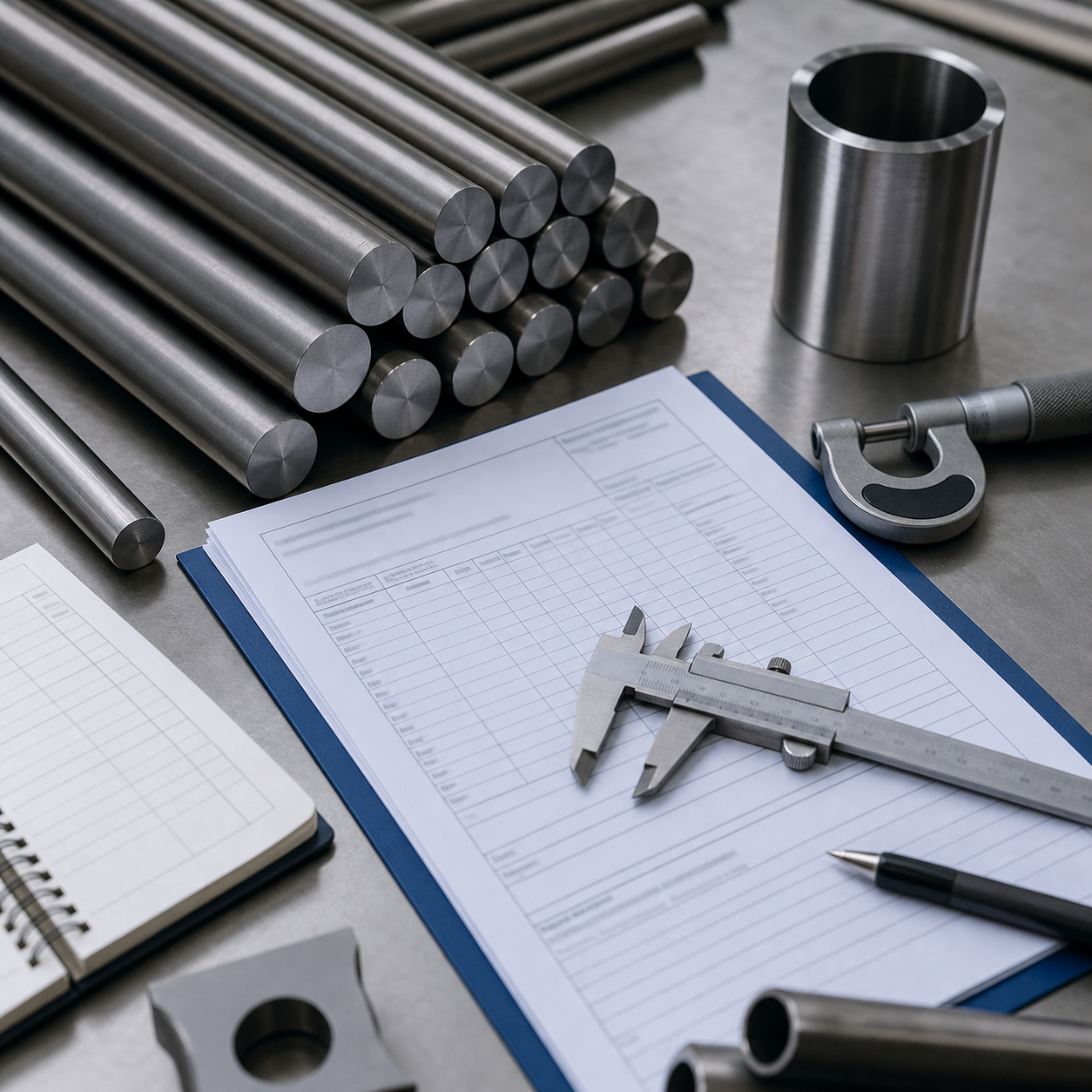
Buying titanium is rarely just a price comparison. Two quotations may look similar on the surface, yet hide very different assumptions about grade, standard, tolerance, testing, surface condition, lead time, and documentation. The mistake usually appears later, when the material arrives and someone realizes that a small missing detail has become a large production problem.
A good supplier should help remove that uncertainty. The best titanium orders begin with questions, not shortcuts.
Why Titanium Buying Needs More Than a Price Comparison
Buying titanium is rarely just a price comparison. Two quotations may look similar on the surface, yet hide very different assumptions about grade, standard, tolerance, testing, surface condition, lead time, and documentation. The mistake usually appears later, when the material arrives and someone realizes that a small missing detail has become a large production problem.
A good supplier should help remove that uncertainty. The best titanium orders begin with questions, not shortcuts.
Many buyers begin with a familiar grade name: commercially pure titanium, Grade 2, Grade 5, Ti-6Al-4V, TA1, TA2, or TC4. That is a useful start, but it is not always enough. The right grade depends on the working environment.
Is the part exposed to seawater, acid, heat, pressure, fatigue, or repeated cleaning? Does it need high strength, formability, weldability, or biocompatibility? A supplier who immediately pushes the most common grade without understanding the application may be saving time at the wrong moment.
Start With the Real Requirement
Titanium products are often ordered according to standards such as ASTM, AMS, ISO, or GB/T requirements. These standards define chemistry limits, mechanical properties, test methods, dimensions, and sometimes heat treatment or inspection expectations.
The standard should appear clearly on the quotation, purchase order, packing documents, and material test certificate. If the project requires ASTM B348 bar, ASTM B265 plate, or ASTM B338 tube, do not leave it implied.
Dimensions are not only numbers; they are agreements. A titanium rod listed as 20 mm diameter may be acceptable for one use and unacceptable for another depending on tolerance, straightness, surface finish, and machining allowance.
Before buying, confirm the acceptable range for thickness, diameter, length, flatness, ovality, wall thickness, and surface roughness where relevant. Ask whether cutting, grinding, polishing, peeling, pickling, or ultrasonic inspection is included or priced separately.
The material test certificate is more than paperwork. It connects the physical product to the quality system behind it. A useful MTC should show the grade, standard, heat number, chemical composition, mechanical properties, dimensions, heat treatment condition, and inspection results where applicable.
Ask for a sample MTC before ordering if the project is critical. For aerospace, chemical processing, medical, and pressure-related applications, traceability is not optional. It is part of the product.
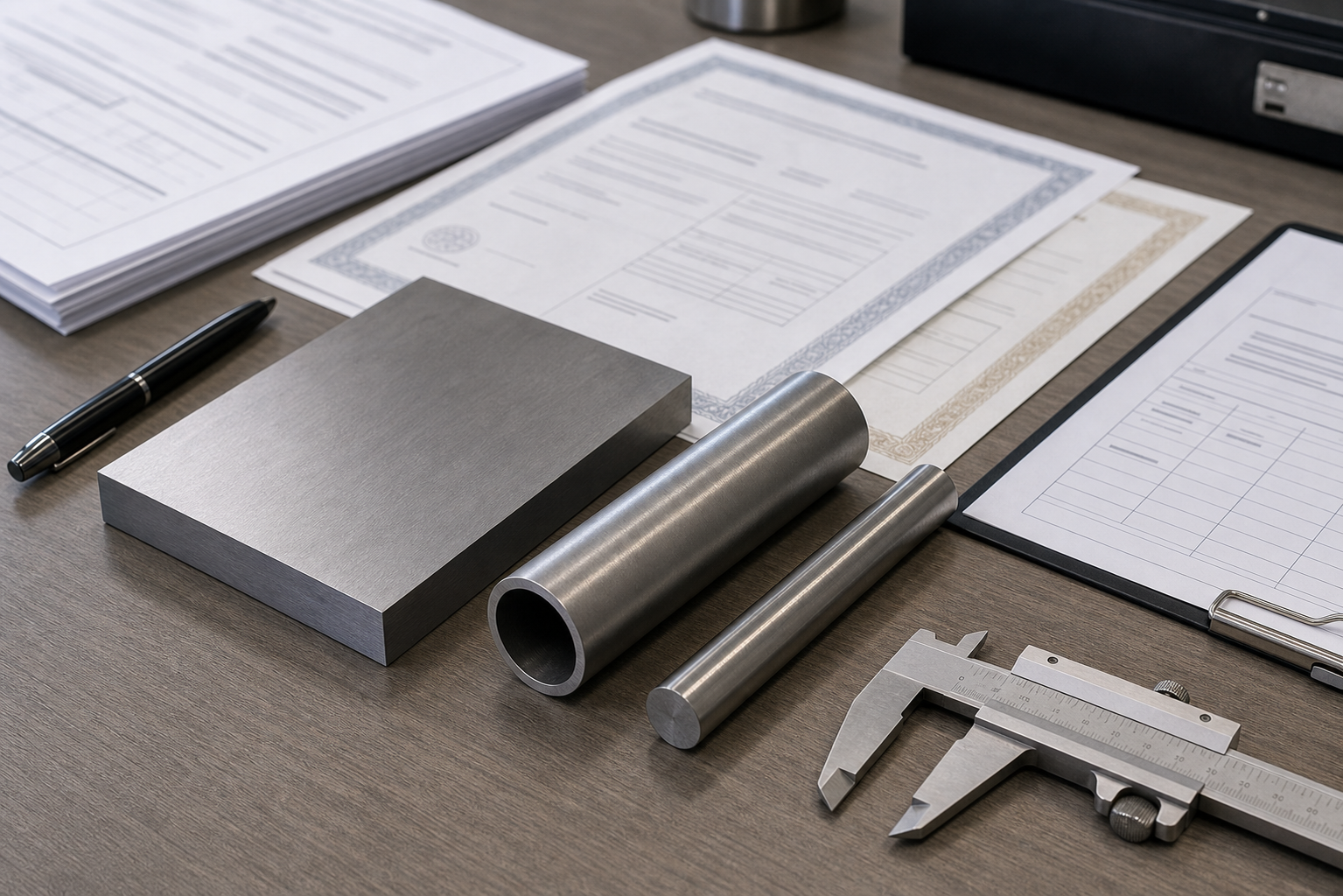
The Core Specification: Grade, Standard, Tolerance, and Surface Condition
Lead time can be misunderstood when supplier and buyer are thinking about different milestones. Does it mean production completion, inspection completion, packing date, export date, or arrival at your warehouse?
A realistic lead time is more useful than an attractive one. Projects are easier to manage when the supplier is honest about what takes time.
Titanium rewards precision. The more clearly buyers and suppliers define grade, standard, tolerance, inspection, packaging, and documentation, the smoother the project becomes. A low price may win attention, but clarity wins trust.
A strong titanium quotation should read like the beginning of a technical agreement, not just a price list. It should state the product form, grade, standard, dimensions, tolerance, surface condition, quantity, inspection requirements, packaging method, and delivery terms. If a supplier sends only a short message with a unit price, the buyer is left to guess what is included. Guessing is where expensive mistakes begin.
Make the Grade Verifiable
For example, titanium plate can be supplied hot rolled, cold rolled, annealed, pickled, blasted, polished, cut to size, or left with machining allowance. Titanium bars may be peeled, ground, forged, rolled, or centerless ground depending on the application. Tubes may require specific wall tolerance, straightness, pressure testing, or eddy current inspection. These details change cost and performance. They should be visible before a purchase order is issued.
Many suppliers can quote from stock, but stock availability does not always mean the material is ideal. A buyer should ask whether the material comes from current inventory, new production, or a subcontracted source. For critical applications, the manufacturing route matters because it affects consistency, traceability, and lead time.
If a custom titanium component requires forging, rolling, machining, welding, or heat treatment, the supplier should be able to explain the main process steps. They do not need to reveal every internal production detail, but they should understand how the product will be made and inspected. A supplier who cannot explain the route may also struggle to solve problems if dimensions, surface finish, or test results become disputed.
Confirm Tolerance Early
Industrial buyers naturally care about price. Titanium is not a material where cost can be ignored. However, the lowest quotation is not always the most efficient option. A slightly higher price may include better tolerance control, cleaner surface preparation, stronger packaging, faster documentation, or more reliable delivery. Those factors can reduce machining time, inspection delays, and customer complaints.
Efficiency means buying material that moves smoothly through the next step. If a titanium bar arrives with inconsistent diameter, the machine shop may lose time. If a tube arrives without complete documentation, the project may pause during review. If a plate arrives with poor surface protection, the buyer may spend extra money on rework. These hidden costs belong in the comparison.
Several warning signs deserve attention. Be careful with quotations that avoid naming a standard, refuse to provide sample certificates, use vague phrases such as “similar grade,” or promise impossible delivery on non-standard material. Also be cautious when the supplier cannot explain packaging, heat number marking, or inspection options.
Another red flag is overconfidence. Titanium has many grades and applications, and responsible suppliers recognize that some projects require engineering review. A supplier who claims that one grade solves every problem may be simplifying the decision too much. Good suppliers ask questions because they know the material deserves precision.
Supplier Evaluation, Documentation, and Inspection
The best buyers turn experience into a checklist. Before ordering, confirm grade, standard, dimensions, tolerance, quantity, surface condition, testing, certificate requirements, marking, packaging, shipping terms, and the person responsible for technical communication. For recurring orders, keep records of which supplier, batch, and specification performed well.
This discipline makes future orders faster and safer. It also helps new team members avoid repeating old mistakes. Titanium purchasing becomes easier when every order is treated as a controlled process rather than a one-time negotiation.
The buying process does not end when the deposit is paid. For titanium orders, buyers should expect clear updates during production, inspection, packing, and shipment. If a dimension changes, a test takes longer than expected, or a document needs correction, early communication prevents frustration on both sides.
This is another reason to choose a supplier with technical discipline. A professional team can explain delays, provide photos or inspection reports when appropriate, and help the buyer prepare for incoming quality checks. Good communication is not a bonus service; it is part of risk control.
Ask How Inspection Works
For international buyers, it is also helpful to confirm export documents, packing photos, and product markings before shipment. These small checks reduce misunderstandings at customs, during warehouse receiving, and when the material is handed to production teams.
That preparation makes the buying process calmer, clearer, and far easier to repeat.
The most useful supplier conversations begin with the end use. A titanium plate for a chemical tank, a bar for a machined aerospace component, a tube for a heat exchanger, and a wire for medical or industrial use may all be called titanium, but the risks are different. The supplier needs to understand the environment, load, temperature, corrosion exposure, and inspection expectations.
Buyers do not need to reveal confidential design details, but they should provide enough context to prevent the wrong recommendation. If the part will be welded, formability matters. If it will be machined to tight tolerance, diameter consistency and internal quality matter. If it will contact seawater or chemicals, corrosion behavior matters. A supplier who asks these questions is protecting the buyer as much as the order.
Check Documents Before Shipment
International titanium trade often involves grade equivalents. A customer may ask for Grade 2, while a Chinese supplier may discuss TA2. A buyer may ask for Grade 5 or Ti-6Al-4V, while the local designation may be TC4. These equivalences can be useful, but they should not be handled casually. Standards may differ in chemistry limits, mechanical properties, or testing expectations.
When grade equivalents serve, confirm the exact standard on the purchase order and certificate. Do not rely only on informal names. A project that requires ASTM material should receive material certified to the relevant ASTM standard. If a substitute is proposed, it should be reviewed and approved before production.
Surface condition is sometimes treated as cosmetic, but in industrial titanium buying it can affect machining, welding, inspection, and final product quality. Pickled surfaces, blasted surfaces, polished surfaces, peeled bars, and ground bars all have different implications. A rough surface may require extra machining. A contaminated surface may create welding problems. A scratched surface may be unacceptable for visible consumer products.
Compare More Than Price
Buyers should define what surface condition is acceptable and whether protective packaging is needed. For thin sheet or precision tube, handling damage can be more costly than the packaging used to prevent it. The supplier's packing method should match the value and sensitivity of the material.
Not every titanium order needs the highest level of testing, but every order needs testing appropriate to its use. A decorative part may require visual and dimensional inspection. A pressure tube may require pressure testing or non-destructive examination. A critical rotating component may require strict internal quality control and mechanical testing.
Buyers should ask which tests are standard and which are optional. They should also ask who performs the tests: the mill, the supplier, or a third-party laboratory. When third-party inspection is required, it should be planned into the timeline and cost from the beginning.
How to Reduce Risk Before and After the Order
Documents are easier to correct before material leaves the factory. Buyers should review the material test certificate, packing list, invoice details, heat numbers, and product markings before shipment when the order is important. A mismatch between certificate and label can delay receiving inspection even if the material itself is correct.
Export projects may also need country-of-origin documents, special declarations, or customer-specific formats. These requirements should not be discovered after the goods arrive at port. Good suppliers ask about documentation early because they understand that paperwork is part of delivery.
For new suppliers or new product types, a sample order can be a practical step. It allows the buyer to evaluate communication, packaging, surface quality, dimensional control, machining behavior, and documentation before committing to larger volume. A small order cannot prove everything, but it can reveal a lot.
Sampling is especially useful for custom titanium parts, private-label products, and projects where finish or tolerance is important. The goal is not to slow purchasing down. The goal is to make scale-up smoother.
Reduce Risk at Delivery
Negotiation is normal, but buyers should know which requirements cannot be sacrificed. If traceability, tolerance, testing, or surface condition is essential, cutting those items to reduce price may create a more expensive problem later. A responsible supplier should explain where savings are possible and where they are risky.
Sometimes cost can be reduced by changing order quantity, delivery schedule, machining allowance, or packaging design. Sometimes it cannot be reduced without changing the product. Clear priorities help both sides find realistic options.
Buying titanium well is not about asking more questions for the sake of bureaucracy. It is about preventing ambiguity. When grade, standard, tolerance, surface condition, inspection, documentation, packaging, and delivery expectations are clear, the supplier can perform better and the buyer can plan with confidence.
In industrial projects, clarity is a form of quality control. The best titanium order is the one where both sides understand exactly what success looks like before production begins.
Keep the Order Repeatable
When several suppliers quote the same titanium item, build a comparison table instead of reading only the final price. Include grade, standard, dimension, tolerance, surface condition, inspection, certificate type, delivery time, packing method, payment terms, and shipping terms. Once those details are visible, the lowest price may no longer be the strongest offer.
For example, one supplier may quote a lower price but exclude ultrasonic testing, while another includes it. One may ship rough-cut material, while another includes precision cutting. One may offer faster production but weaker documentation. A clear comparison helps purchasing teams defend their decision internally and avoid later disputes with engineering or quality departments.
Conclusion: Clarity Is the Real Quality Control
When titanium arrives, the receiving team should check the same items that were defined before ordering. Confirm grade, standard, heat number, dimensions, quantity, surface condition, labeling, and certificate match. If possible, photograph packaging before opening, especially for large or high-value shipments. This creates a record if transport damage or missing items are discovered.
Receiving inspection does not need to be complicated, but it should be disciplined. Many titanium disputes become harder to solve because problems are noticed late or documented poorly. The purchase order, supplier confirmation, certificate, labels, and physical material should all tell the same story.
A supplier that performs well once should still be evaluated over time. Track delivery accuracy, document quality, response speed, packaging condition, and how the material performs in production. These records help buyers identify reliable partners and avoid repeating mistakes with suppliers who only look good during the quotation stage.
Keep Future Orders Easier
For recurring titanium orders, this history becomes valuable. It allows purchasing teams to negotiate from facts, engineering teams to trust incoming material, and management teams to understand which suppliers reduce risk rather than simply reduce unit price.
In titanium purchasing, technical sales support can be as valuable as fast quotation. A capable sales team helps translate customer drawings, standards, and end-use requirements into a manufacturable order. They know when to ask about tolerance, heat treatment, testing, or surface finish because they have seen how small omissions create large delays.
This support is especially important for buyers who source titanium only occasionally. A transparent supplier can guide the buyer through grade selection, certificate review, packaging, and inspection without making the process feel unnecessarily complicated.
A final useful habit is to save every approved specification and certificate in one project folder. When the same titanium material is reordered months later, that record prevents teams from starting from memory and helps the next purchase move faster with fewer questions.
For large programs, buyers can also create an approved supplier file that includes sample certificates, packing photos, previous inspection notes, and communication records. This turns titanium purchasing from a one-time transaction into a repeatable system, which is especially useful when several departments are involved in the same project.
Share this article

Written by : Young Things Metal Co,LTD
Follow us
Latest articles
October 10, 2026

October 10, 2026