A production line rarely stops because a buyer chose a dramatic material. It usually stops because one small part does not arrive, does not fit, or cannot pass inspection when the rest of the project is ready. Titanium parts make this decision more sensitive because the material is valuable, machining time is not always short, and the wrong specification can create both cost and delay. That is why the choice between stock titanium parts and custom titanium parts deserves more attention than a simple price comparison.
Stock titanium parts can be the practical answer when the geometry is standard, the grade is common, and the project needs speed more than perfect tailoring. Custom titanium parts become the better answer when the part must match a specific assembly, load condition, surface requirement, or documentation package. Neither option is automatically better. The smarter choice depends on how the part serves, what failure would cost, and how much freedom the engineering team has to adjust the design.
For buyers, engineers, and maintenance teams, the real question is not whether stock or custom sounds more professional. The question is which route protects the schedule while still meeting the technical requirement. A standard titanium washer, bolt, flange, or small plate may be enough for a repair or prototype. A machined bracket, transition fitting, sealing component, or precision spacer may need custom work because a small dimensional error can affect alignment, sealing, vibration, or corrosion performance. This article looks at the decision in practical terms so that the purchasing conversation starts with the right details.
Why the Stock vs Custom Decision Matters
Titanium often works because the surrounding environment is demanding. Chemical exposure, seawater, weight limits, heat, cleanliness, or long service life may all influence the choice. When a material makes sense for these reasons, the part itself cannot be treated as a casual commodity. A low-cost item can become expensive if it delays installation, requires rework, or fails because the dimensions, grade, or surface condition were not matched to the application.
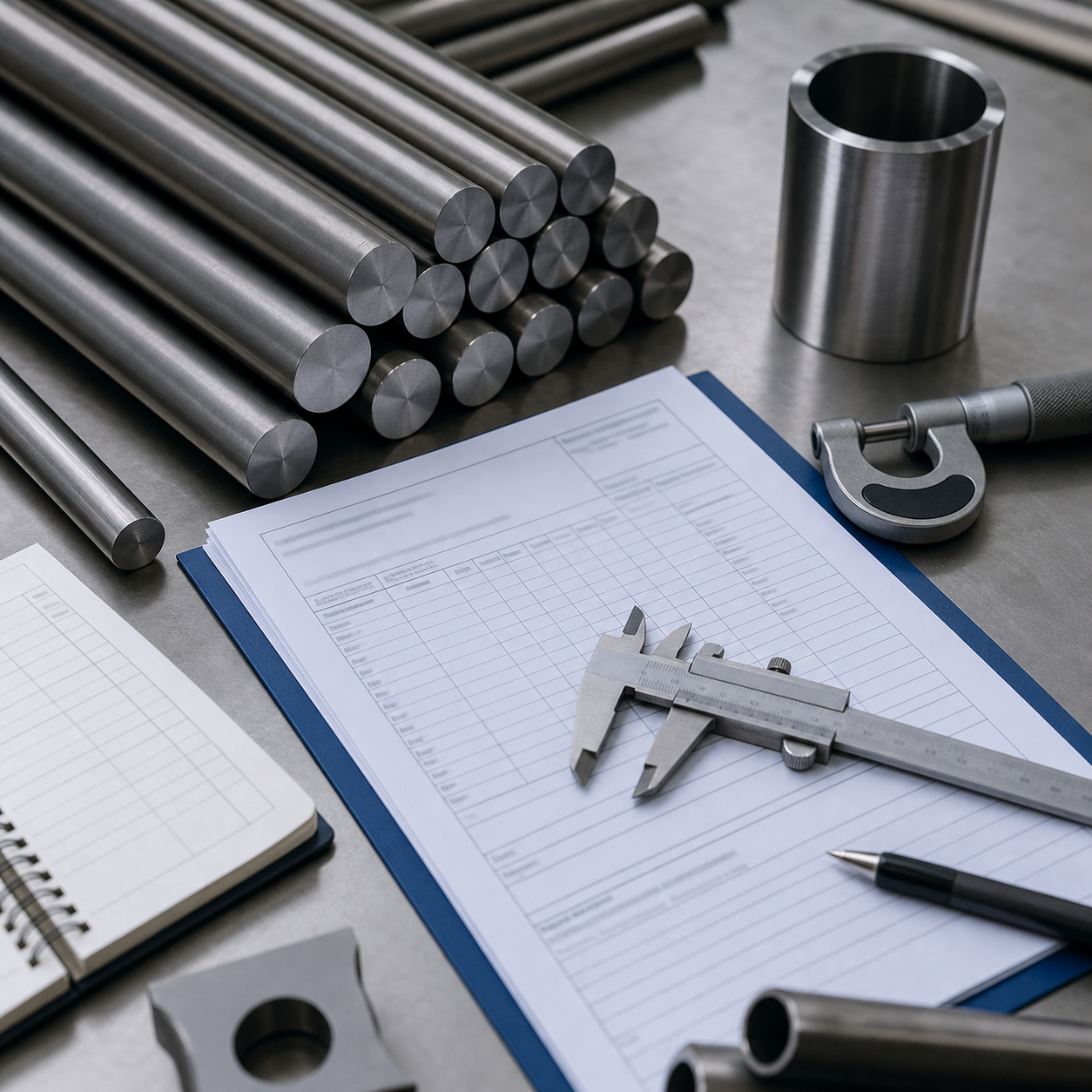
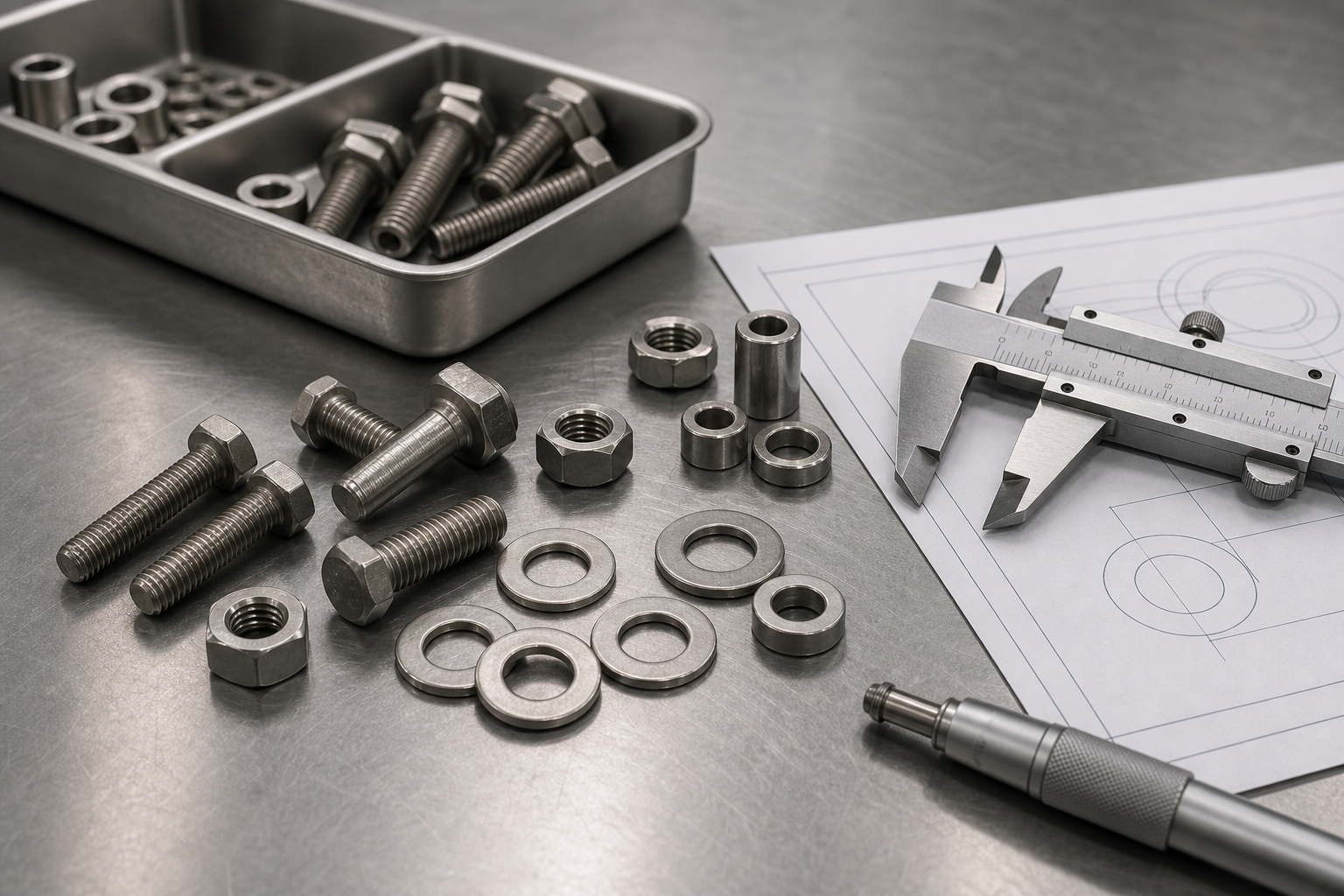
Stock titanium parts are normally built around widely used dimensions and specifications. They may include fasteners, washers, nuts, simple fittings, round bars cut to length, plates, sheets, blanks, tube sections, or standard flanges. The main value is availability. When a supplier has the right grade and size in stock, the buyer can reduce lead time, avoid new tooling, and keep procurement straightforward. For maintenance teams and small batch projects, this can be the difference between a quick repair and a long shutdown.
Availability Is Only One Factor
Custom titanium parts follow a different logic. They are made from a drawing, sample, model, or detailed specification. The supplier may need to source the correct mill material, machine the geometry, apply a finish, inspect critical dimensions, and provide certificates or test reports. This route usually takes longer and costs more per part, especially at low quantities, but it can remove risk when a standard part would require compromise. In some projects, the custom option is not a luxury; it is the only way to make the assembly work correctly.
The decision matters because the wrong route creates hidden costs. Choosing stock parts for a design that really needs custom machining can lead to field modification, extra welding, poor fit-up, leakage, or inconsistent performance. Choosing custom parts when stock items would work can waste budget and stretch the schedule without adding value. A good supplier should help the buyer separate genuine requirements from preferences that can be adjusted without damaging the project.
Where Stock Parts Fit
There is also a documentation issue. Industrial titanium buyers often need material certificates, grade confirmation, dimensional inspection, and traceability. A stock part may come with basic documentation if it is made from certified material, but the paperwork can vary by item and supplier. Custom parts can be built around a documentation plan from the start. If the project involves pressure equipment, chemical processing, marine service, medical-related tooling, or export inspection, the paperwork may be almost as important as the physical part.
Another reason the decision matters is that titanium is less forgiving of rushed redesigns than some common metals. Machining, forming, and welding conditions need control. If a project changes late because a stock part cannot be adapted, the team may face new drawings, new quotations, and new approval cycles. A careful choice at the beginning reduces that risk.
When Stock Titanium Parts Are the Smarter Choice
Stock titanium parts are usually the smarter choice when the part has a standard function and the application does not require unusual tolerances. Common examples include titanium fasteners for corrosion-resistant assemblies, washers used to isolate dissimilar metals, standard discs or blanks for small fabrication jobs, bar or plate pieces for prototypes, and simple fittings where catalog dimensions match the design. In these cases, the value comes from speed, predictable cost, and lower administrative burden.
Lead time is the strongest argument for stock. If a maintenance team needs to replace a corroded component, a buyer may not have time to wait for a new machining run. A standard titanium bolt or washer can be ordered quickly if the grade, thread, diameter, and length are available. Even when the part is not the cheapest option on paper, avoiding downtime can make stock the economical route. This is especially true for production equipment where one missing item can hold up a larger repair.
When Fit Becomes Critical
Stock also works well during early design or trial stages. Engineers may use standard titanium rods, plates, or small components to validate dimensions, corrosion behavior, or assembly sequence before committing to a custom part. The first version of a project does not always need optimized geometry. Sometimes it needs material in hand so that the team can learn. Once the design is stable, custom parts can be specified more confidently.
Another advantage is reduced minimum order pressure. Custom manufacturing often carries setup cost, programming time, tooling preparation, and inspection planning. For one-off or very small quantities, these setup costs can dominate the price. A stock item spreads that cost across general inventory, which can make the purchase more reasonable. If the dimensions are acceptable and the service conditions are not highly specialized, stock avoids paying for customization that the project does not really need.
Tolerances Need Early Agreement
Stock parts can also simplify replacement planning. When equipment uses standard titanium fasteners or spacers, future maintenance is easier because the buyer can source the same size again. Custom parts may still be necessary in critical locations, but over-customizing every small item can make the maintenance system fragile. A thoughtful design often uses stock parts wherever possible and reserves custom parts for places where geometry or performance demands it.
However, stock should not be chosen blindly. Buyers should confirm the titanium grade, applicable standard, dimensions, surface condition, and certificate availability. A stock Grade 2 item and a Grade 5 item may look similar but behave differently in forming, strength, corrosion service, and machining. A part that is available quickly may still be wrong if the grade or tolerance is not suitable. It is also important to check whether the stock item has been stored properly, whether the surface is clean, and whether packaging protects it during transport.
The best use of stock titanium parts is not simply to buy what is easiest to find. It is to match standard availability with a requirement that truly allows standardization. When the design has flexibility, stock parts can be efficient and reliable. When the design is fixed and sensitive, stock may only shift the cost from purchasing to installation.
When Custom Titanium Parts Become Necessary
Custom titanium parts become necessary when the part has to do more than occupy a standard space. If the geometry controls alignment, sealing, load transfer, vibration behavior, fluid flow, or connection to other parts, a standard item may not be enough. Titanium often serves in environments where the part is exposed to corrosion or weight constraints, and the surrounding system may leave little room for adjustment. A custom machined component can solve these constraints directly.
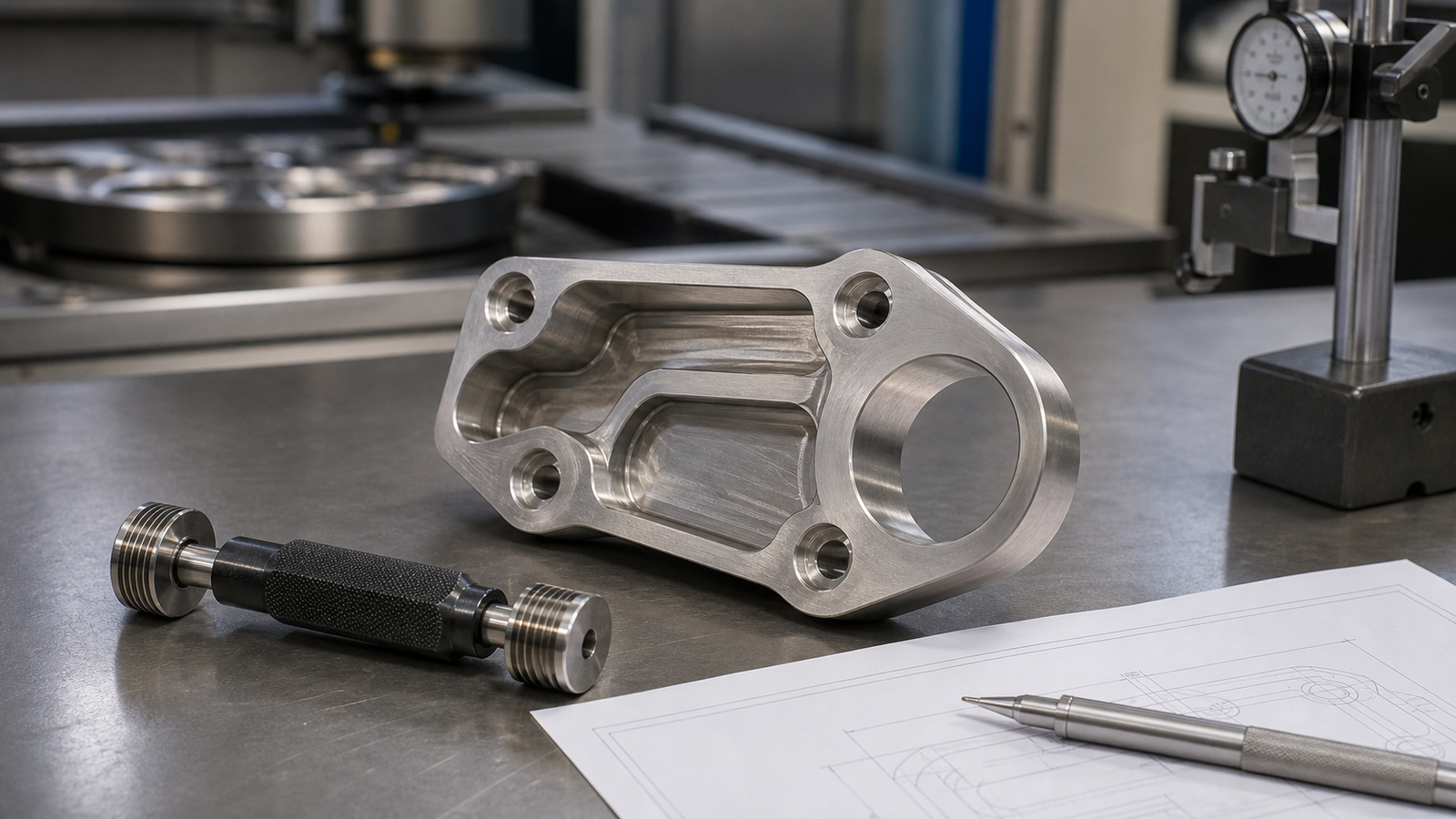
Tolerances are one of the clearest signs that custom work is needed. A standard plate, ring, or spacer may be close to the required size, but close is not always acceptable. If a mating surface must maintain flatness, a bore must align with a shaft, or a hole pattern must match existing equipment, the part needs controlled machining and inspection. Field drilling or grinding can introduce burrs, contamination, surface damage, and inconsistent results. For titanium, poor modification practices can also create local heating or tool marks that buyers would rather avoid.
Surface Requirements Matter
Custom work is also important when the part must combine several functions. A simple titanium block from stock may be available, but the final component might need pockets, counterbores, radii, threaded holes, grooves, or relief features. These details affect stress concentration and assembly behavior. A custom drawing allows the supplier to plan machining sequence, choose proper tooling, and inspect features that matter. It also gives the buyer a record of what was made, which is useful for repeat orders or future audits.
Surface requirements can also push a project toward customization. Some parts need a pickled surface, a machined finish, polishing, passivation, deburring, edge breaking, or controlled roughness. A stock part may arrive with a general surface condition that is acceptable for many uses but not for every project. If the part contacts a seal, fluid stream, clean process, or visible assembly, the finish buyers should specify clearly. Custom production can include the finish as part of the process rather than treating it as an afterthought.
Compare the Full Cost
Grade selection is another factor. Commercially pure titanium grades often serve for corrosion resistance and formability, while titanium alloys may be selected for strength. A standard component in one grade should not be substituted for another just because the dimensions match. If the design requires a particular strength level, corrosion behavior, weldability, or heat treatment condition, custom sourcing may be necessary. The supplier should confirm material certificates and avoid vague descriptions such as “titanium material” without grade detail.
Custom parts also make sense when the cost of failure is high. In a non-critical jig or temporary fixture, a standard item may be acceptable. In a chemical processing assembly, marine hardware system, aerospace-related fixture, heat exchanger support, or precision equipment, the wrong part can create larger consequences. The buyer may need dimensional reports, inspection photos, material traceability, and packaging controls. These requirements are easier to manage when the order is treated as a custom project from the beginning.
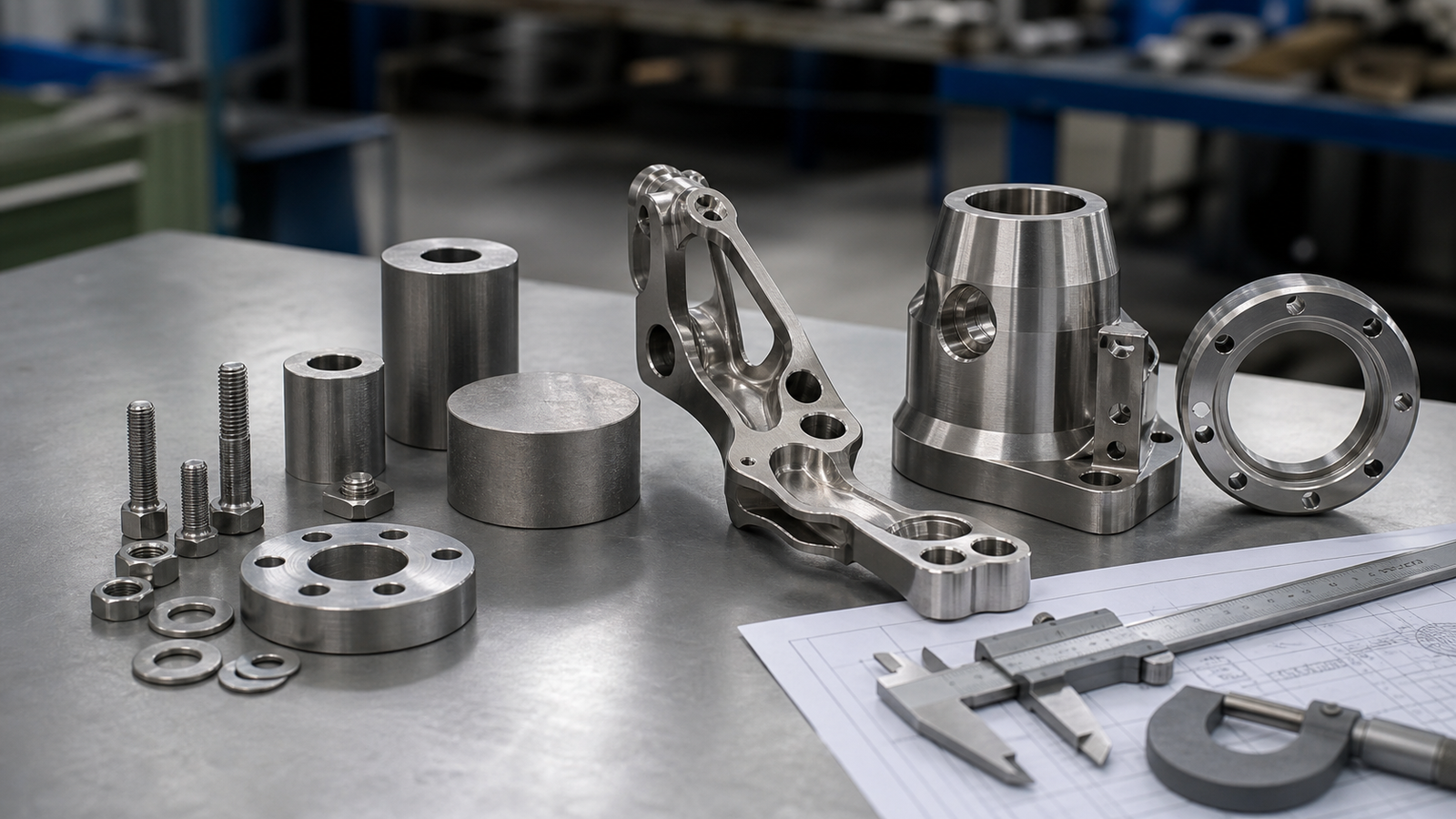
One practical point is that custom does not always mean complex. A simple titanium spacer with a non-standard length can be custom. A disc with a special hole pattern can be custom. A small bracket with rounded edges and a specified surface can be custom. The important distinction is that the part is made to a specific requirement rather than pulled from general inventory. Good custom work starts with clear communication, not necessarily with complicated geometry.
How Buyers Should Specify and Evaluate Titanium Parts
The most useful purchasing request starts with the information that controls risk. For stock titanium parts, buyers should provide grade, size, standard, quantity, required certificate, and delivery expectation. For custom titanium parts, the request should include a drawing or model, material grade, tolerances, surface finish, quantity, inspection requirements, packaging needs, and any operating environment details that could affect production. The more precise the requirement, the easier it is for the supplier to quote honestly.
A drawing does not need to be overloaded with unnecessary restrictions, but it should identify critical features. If every dimension is marked with a tight tolerance, the part may become more expensive without improving performance. If no dimension is controlled, the supplier may not know what really matters. Buyers should separate critical-to-function dimensions from general dimensions. This helps the supplier focus inspection and avoid spending time on features that do not affect the assembly.
Documentation Reduces Risk
Material grade should be written clearly. “Titanium part” is not enough. Grade 2, Grade 5, Grade 7, Grade 12, or another grade may be appropriate depending on the project. The buyer should also confirm whether the part is made from plate, bar, tube, forging, or another form. The starting material can influence grain structure, availability, machining cost, and certificate details. If the end use has a standard or code requirement, that should be stated before quotation.
Surface condition should also be practical. A high polish may look impressive, but it may not add value for a hidden structural component. A machined finish may be enough for many parts. A pickled or passivated surface may be more relevant for corrosion service. Deburring and edge treatment are often more important than visual brightness because sharp edges can damage seals, create handling risks, or interfere with assembly. When buyers specify finish, they should explain the function of that finish whenever possible.
A Practical Sourcing Choice
Quantity changes the economics. A one-piece custom part may carry high setup cost, while a batch can spread programming and inspection time across more units. If future repeat orders are likely, the buyer should say so. The supplier may then recommend a more stable production route, preserve tooling data, and keep material planning in mind. For stock parts, larger quantities may require checking inventory depth rather than assuming all units are immediately available.
Evaluation should include more than unit price. Buyers should compare lead time, certificate quality, inspection capability, communication clarity, packaging, and the supplier’s willingness to discuss tradeoffs. A very low quote may exclude inspection or finishing that another supplier included. A fast delivery promise may depend on substituting a grade or surface condition. Asking direct questions early is better than discovering these differences when the part arrives.
Packaging is worth mentioning because titanium parts often have finished surfaces that should not be scratched or contaminated. Small parts should be separated or bagged when needed. Precision faces should be protected. Export packaging should match the transport route. Good packaging does not make a poor part acceptable, but poor packaging can damage a good part before it reaches the production floor.
Finally, buyers should keep records. If a stock part works well, save the specification, certificate, supplier reference, and order details. If a custom part is successful, keep the drawing revision, inspection report, and any lessons learned during installation. These records turn a one-time purchase into a repeatable sourcing decision.
Conclusion: Choose the Part That Protects the Line
The best choice between stock and custom titanium parts is the one that protects the project from avoidable delay, rework, and uncertainty. Stock parts are valuable when standard geometry, available inventory, and normal documentation can satisfy the requirement. They are often the right answer for maintenance, prototypes, common fasteners, simple blanks, and designs that have room for standard dimensions. They help teams move quickly and keep costs controlled.
Custom titanium parts are valuable when the part must match a precise assembly, carry a specific load, meet a defined surface condition, or come with a more complete inspection record. They take more planning, but they can reduce installation risk and improve repeatability. Custom work is not about making every part complicated. It is about making the right details deliberate.
A practical sourcing strategy uses both approaches. Start by asking which requirements are fixed and which are flexible. Use stock titanium parts where they truly fit. Use custom titanium parts where performance, fit, documentation, or long-term reliability depends on it. When the decision is made this way, the part is less likely to be the small item that stops the line.
Share this article

Written by : Young Things Metal Co,LTD
Follow us
Table Of Content
Latest articles
October 19, 2026

October 19, 2026