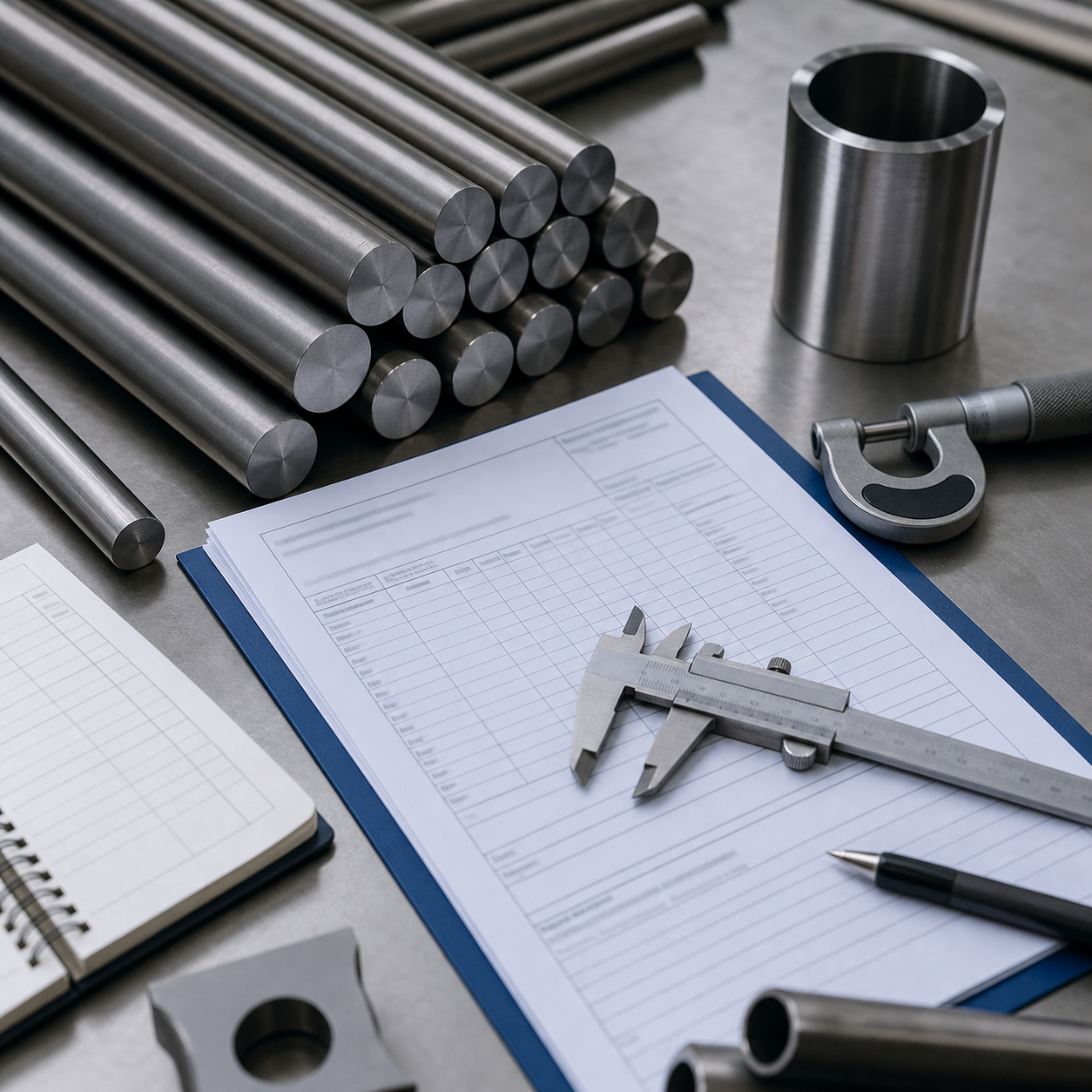
A heat exchanger is easy to underestimate from the outside. It may look like a quiet bundle of tubes inside a shell, a compact unit hidden in a plant room, or a technical line item on a purchasing sheet. Yet inside that equipment, material choice carries an invisible load. The tubes must move heat efficiently while surviving pressure, vibration, temperature change, chemistry, cleaning cycles, and time.
When seawater, chlorides, acids, or aggressive process fluids are part of the environment, ordinary material decisions become expensive very quickly. A tube that corrodes early does not simply fail as a piece of metal. It can interrupt production, contaminate fluids, create maintenance shutdowns, and force urgent replacement.
This is why titanium tubing has become a serious material choice for many modern heat exchangers.
Why Titanium Tubing Matters in Heat Exchangers
A heat exchanger is easy to underestimate from the outside. It may look like a quiet bundle of tubes inside a shell, a compact unit hidden in a plant room, or a technical line item on a purchasing sheet. Yet inside that equipment, material choice carries an invisible load. The tubes must move heat efficiently while surviving pressure, vibration, temperature change, chemistry, cleaning cycles, and time.
When seawater, chlorides, acids, or aggressive process fluids are part of the environment, ordinary material decisions become expensive very quickly. A tube that corrodes early does not simply fail as a piece of metal. It can interrupt production, contaminate fluids, create maintenance shutdowns, and force urgent replacement.
This is why titanium tubing has become a serious material choice for many modern heat exchangers.
In heat exchanger design, strength matters, but corrosion often decides service life. Chloride-rich water, brine, cooling seawater, acidic media, and high humidity can attack metals in ways that are difficult to see until damage is already advanced.
Why Each Tube Matters
Titanium forms a stable oxide film on its surface. This film is thin, adherent, and able to renew itself when oxygen is present. That natural protection gives titanium excellent resistance in many chloride environments where some stainless steels may suffer from pitting or crevice corrosion.
For engineers and buyers, this means titanium is not only a premium material. It is a risk management tool. In systems where failure is costly, the value of fewer leaks and longer intervals between maintenance can outweigh the higher initial material cost.
One reason titanium tubing is attractive in heat exchangers is the balance between strength and low density. Titanium is much lighter than many traditional industrial metals, yet it offers useful mechanical strength and excellent corrosion resistance. This allows designers to consider efficient tube wall configurations while still protecting the system from aggressive fluids.
Heat Transfer Needs Consistency
Wall thickness must always be selected according to pressure, temperature, code requirements, erosion risk, and manufacturing tolerance. Still, the combination of low weight and durability can help reduce structural load and simplify handling during fabrication, installation, and maintenance.
Titanium heat exchanger tubing is often found in desalination systems, power plant condensers, offshore platforms, chemical processing equipment, aquaculture systems, and seawater cooling loops. These applications share one theme: the working environment is not gentle.
In desalination, titanium resists the constant presence of salt and heat. In chemical plants, it can handle selected corrosive media where compatibility has been confirmed. In marine systems, it helps protect equipment that may be difficult to access once installed.
The material does not remove the need for engineering review. Flow velocity, deposits, galvanic contact, tube sheet design, and cleaning methods still matter. But titanium gives designers a strong foundation when corrosion resistance is central to the problem.
Performance Depends on the Whole System
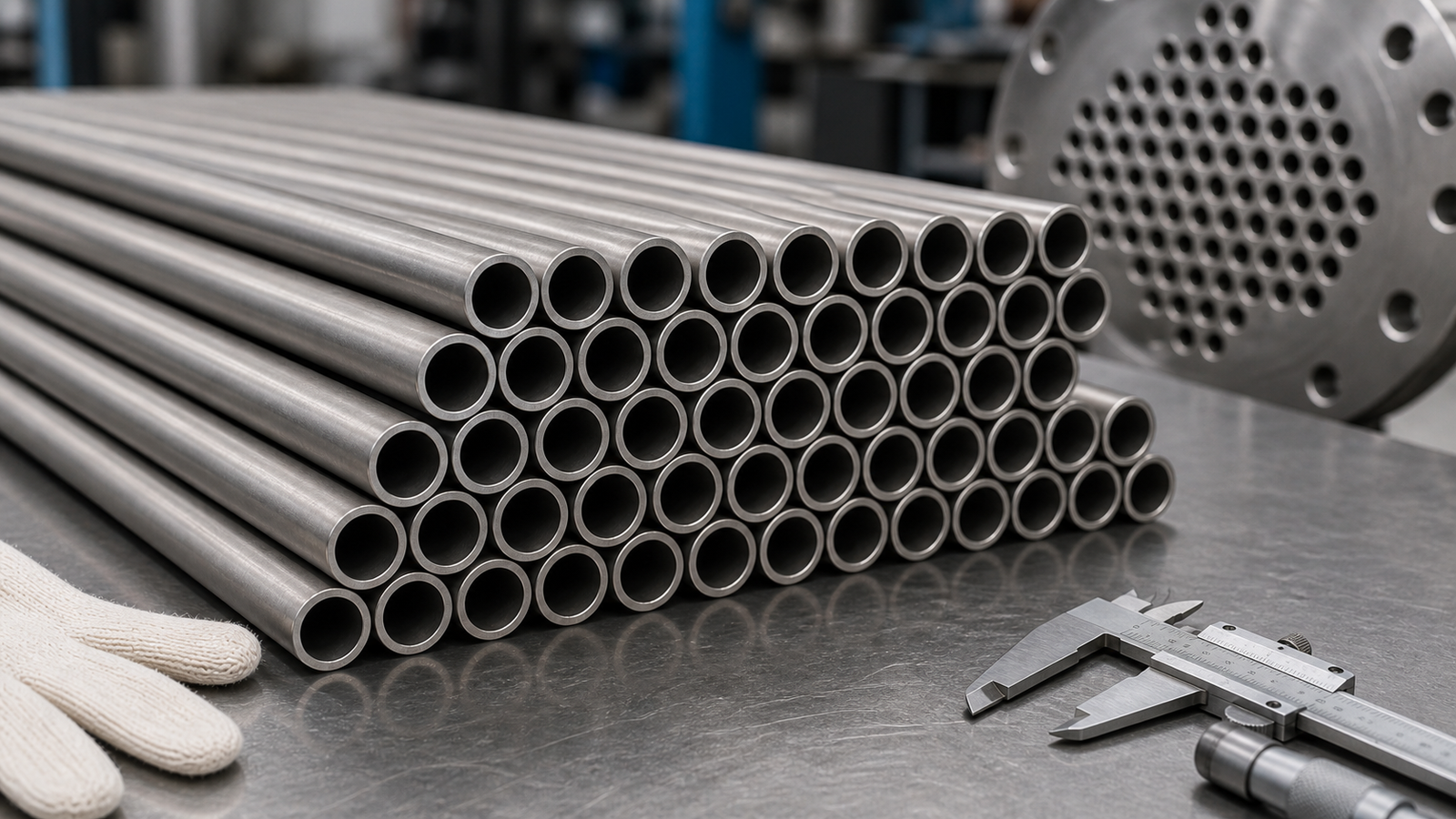
A good titanium tube order should not rely on a grade name alone. Buyers should confirm the standard, dimensions, wall thickness tolerance, surface condition, inspection requirements, and mill test certificate. For critical equipment, traceability by heat number is especially important.
Questions about ultrasonic testing, eddy current testing, hydrostatic testing, flattening tests, or flare tests should be settled before production begins. Clear documentation prevents confusion later, especially when the tube must satisfy an end user, inspector, or engineering contractor.
Titanium tubing earns its place in heat exchangers because it solves a practical problem: how to keep heat moving while resisting the environments that usually shorten equipment life. It is not the cheapest answer for every system, but in aggressive service, it can be the more reliable one.
In the quiet interior of a heat exchanger, durability is not dramatic. It is simply the difference between equipment that works and equipment that becomes a maintenance story.
Corrosion Starts at the Surface
When purchasing titanium tubing for heat exchangers, the grade name is only the first line of the specification. Buyers should also confirm outside diameter, wall thickness, length, tolerance, straightness, surface condition, annealing condition, and applicable standard. For many projects, ASTM or ASME requirements will define part of the order, but the purchase document should still state the details clearly.
Testing requirements are equally important. Depending on the application, buyers may request hydrostatic testing, pneumatic testing, eddy current testing, ultrasonic inspection, flattening, flaring, or visual inspection. Not every project needs every test. The point is to match inspection to risk. A tube used in a critical seawater condenser deserves a different review than a tube used in a low-risk prototype.
Heat exchanger failures do not always begin in the middle of a tube. The tube-to-tube-sheet area can be a demanding zone because it combines mechanical stress, crevice conditions, different materials, and cleaning challenges. Expansion method, welding method, tube sheet material, gasket selection, and fluid chemistry all influence reliability.
Inspect Tube Ends Carefully
Titanium's corrosion resistance is a major advantage, but the surrounding design must support it. Engineers should review galvanic compatibility, crevice geometry, and maintenance procedures. A well-chosen titanium tube can be undermined by poor joint design, just as a good alloy can be wasted by careless fabrication.
Even corrosion-resistant materials benefit from good operating practices. Deposits, biological growth, sediment, and stagnant flow can reduce heat transfer and create localized environments. Regular cleaning schedules, suitable cleaning chemicals, and proper flow velocity help maintain performance.
Because titanium resists many corrosive environments, operators may be tempted to treat it as indestructible. That is a mistake. The better view is that titanium gives the system a strong safety margin, but responsible maintenance still protects efficiency and uptime. Heat exchangers are performance equipment, not just corrosion tests.
Titanium is not required in every heat exchanger. Clean fresh water, mild operating temperatures, easy access, and low consequences of failure may allow stainless steel, copper alloys, or other materials to make more economic sense. A good supplier should be comfortable saying when titanium is unnecessary.
The strongest case appears when the environment includes seawater, brine, chlorides, aggressive chemicals, high replacement cost, or long expected service life. In those situations, titanium's higher purchase price can become a reasonable trade for lower maintenance risk. The decision should come from operating conditions, not from material fashion.
Specification, Testing, and Supplier Communication
A reliable titanium tubing supplier should help buyers translate equipment requirements into a clear order. They should understand standards, inspection options, packaging protection, and documentation. Tubes should be labeled or traceable, packed to prevent damage, and supplied with certificates that match the material.
For large projects, consistency across batches matters. Discuss production capacity, lead time, and whether trial samples or pre-shipment inspection are needed. A heat exchanger is a system of many repeated parts, so small variations can become large issues. Careful sourcing helps the equipment builder avoid surprises later.
Titanium tubing matters in heat exchangers because it contributes a powerful layer of corrosion resistance and mechanical reliability. But successful equipment depends on several layers: correct specification, good tube quality, thoughtful joint design, suitable testing, and responsible operation.
When those layers work together, titanium tubing does more than survive harsh media. It helps the whole system operate with fewer interruptions and a longer useful life.
Confirm Testing and Records
When discussing titanium tubing, buyers sometimes focus only on thermal conductivity. Titanium does not conduct heat as quickly as copper, but heat exchanger performance depends on the full system: tube wall thickness, surface area, flow rate, fouling behavior, temperature difference, cleaning schedule, and corrosion allowance. A material that resists corrosion may allow reliable long-term heat transfer even if its conductivity is not the highest on a chart.
This is important in seawater service. If a more conductive material corrodes, fouls quickly, or requires frequent replacement, theoretical heat transfer becomes less valuable. Titanium's strength is not that it wins every thermal comparison. Its strength is that it keeps working in conditions where corrosion can dominate the economics of the equipment.
Titanium heat exchanger tubes often work with careful attention to wall thickness. A thinner wall can support heat transfer and reduce weight, but it must still meet pressure, erosion, handling, and code requirements. Tolerance control matters because small variations are repeated across hundreds or thousands of tubes.
Think Beyond Tube Price
Buyers should define whether the tube is seamless or welded, what tolerance standard applies, and whether additional inspection is required. Straightness, ovality, surface cleanliness, and end condition can all affect assembly. Tube quality is not only a property of the metal; it is a property of manufacturing consistency.
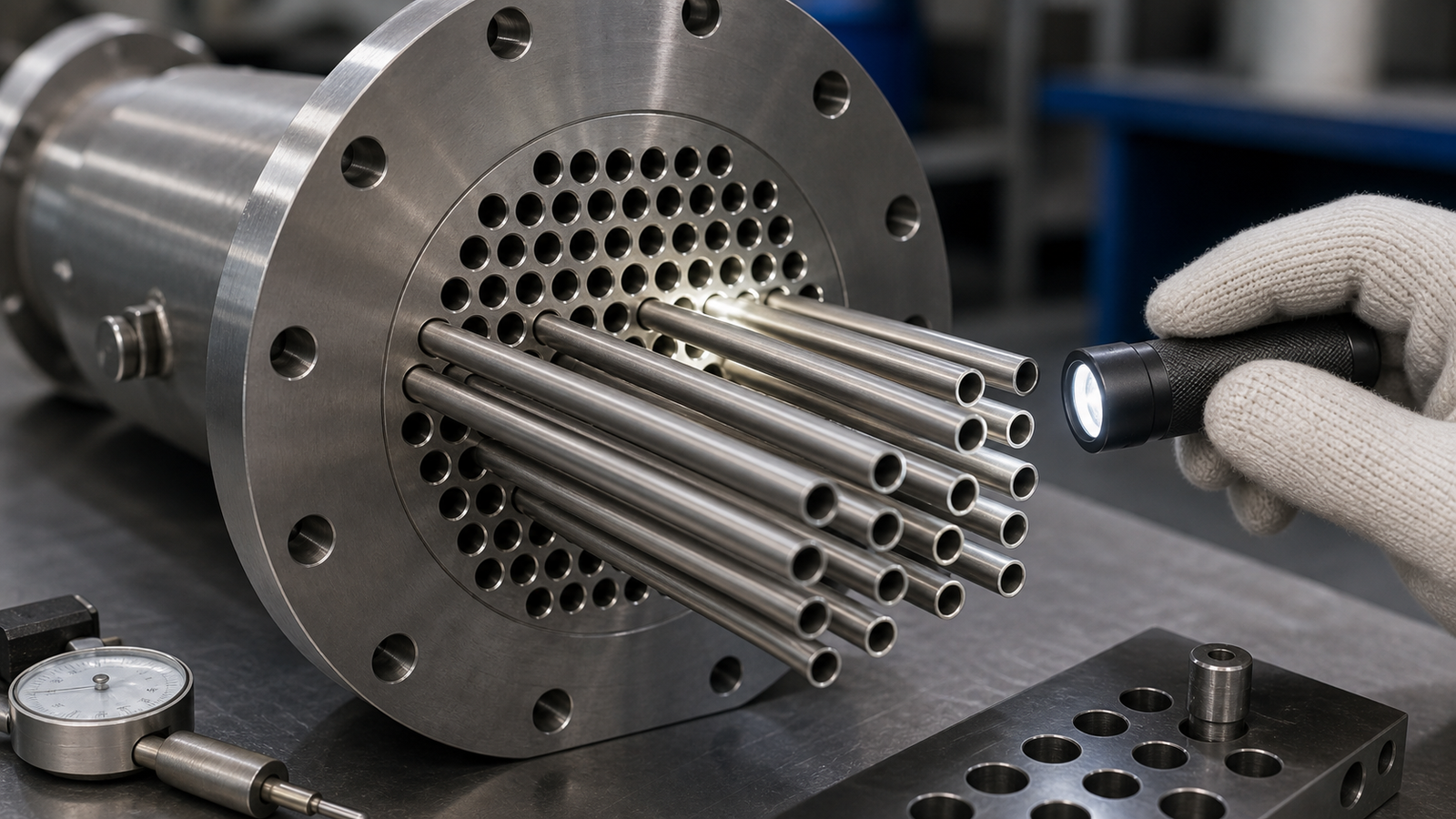
How tubes are fixed into the tube sheet can influence reliability as much as the tube material. Mechanical expansion, seal welding, strength welding, or combined methods may be used depending on the design. Each method creates different stresses and inspection needs.
Titanium requires clean handling during welding, with proper shielding to avoid contamination. Fabricators should understand titanium behavior and use suitable procedures. A high-quality tube can still be compromised by poor assembly, so equipment builders should choose partners familiar with titanium fabrication.
Heat exchangers live in real fluids, not clean diagrams. Seawater can carry organisms, sand, silt, and dissolved minerals. Process fluids may leave deposits. Fouling reduces heat transfer and can create local conditions that are different from the bulk fluid. Even when titanium resists corrosion, deposits can hurt performance.
Cleaning methods should be compatible with titanium and with the rest of the system. Mechanical cleaning, chemical cleaning, backflushing, filtration, and operating velocity all deserve review. The right cleaning strategy protects both efficiency and service life.
Assembly, Cleaning, and Lifecycle Cost
A titanium heat exchanger tube may cost more than an alternative material at purchase, but tube cost is only one part of equipment cost. Downtime, leakage, replacement labor, lost production, cleaning, and inspection can be far more expensive over the life of the system. This is why titanium often works for condensers, desalination, offshore systems, and chemical plants.
Lifecycle cost analysis should include expected service environment, maintenance access, consequences of failure, and required operating life. In a mild environment, titanium may not be justified. In aggressive service, it may be the most economical choice precisely because it avoids repeated trouble.
A strong titanium tube supplier should provide more than stock availability. Engineers may need help confirming standards, tolerance, testing, heat treatment condition, packing, and documentation. They may also need consistent batch supply for large equipment builds. Communication before production can prevent costly mismatch later.
Installation Details Matter
For buyers, the best supplier is one who can explain both capability and limits. If a dimension is difficult, a test adds lead time, or a surface requirement changes cost, the supplier should say so clearly. Heat exchanger projects reward honesty because the equipment is too important for vague promises.
Titanium tubing matters because heat exchangers need durable heat transfer, not just heat transfer on the first day. In seawater, brine, and corrosive industrial fluids, the tube must resist the environment while maintaining performance over time.
That combination is why titanium remains a trusted material in demanding heat exchanger service. It brings corrosion resistance, strength, and long-term stability to equipment where reliability is often the real measure of efficiency.
Buyers should identify the correct standard before requesting a quote. Titanium tubes may be ordered under different specifications depending on whether they are seamless, welded, intended for condensers, used in pressure service, or supplied for general industrial applications. The standard affects chemistry, mechanical properties, testing, tolerances, and documentation.
A Practical Specification View
If a drawing or end user specification names a standard, the supplier should quote to that standard exactly. If the buyer is unsure, the supplier can help clarify options, but the final requirement should be written into the purchase order. Ambiguity at this stage can create expensive problems during inspection.
Thin-wall titanium tubing can be strong in service yet vulnerable to careless handling before installation. Ends can be dented, surfaces can pick up scratches, and long tubes can bend if packed poorly. Good packaging may include end caps, separators, bundled protection, moisture control, and rigid outer cases.
For export shipments, packing is not a minor detail. A tube that arrives damaged may delay an entire heat exchanger build. Buyers should ask for packing photos and confirm how tubes will be protected during loading, transport, and unloading.
Conclusion: Durable Heat Transfer Requires More Than a Material Name
The tube supplier, heat exchanger fabricator, and end user may all have different priorities. The supplier focuses on material quality, the fabricator focuses on assembly, and the end user focuses on service reliability. Good communication connects these priorities before production begins.
If the fabricator needs special tube lengths, clean ends, specific markings, or particular bundle packaging, those details should be shared early. Titanium performs best when the whole project team treats the tube as a precision component rather than a simple commodity.
Before placing a heat exchanger tube order, buyers should confirm the fluid, temperature range, pressure, required standard, tube dimensions, wall tolerance, length tolerance, surface condition, inspection tests, certificate format, marking, and packing method. If the tubes will be expanded or welded into a tube sheet, the fabricator's requirements should also be included.
These questions prevent the common problem of buying material that is technically titanium but not quite suitable for the equipment. A heat exchanger is too important for vague specifications. The tube order should be as precise as the engineering behind the system.
Specify for Assembly, Not Only Supply
A single tube may look simple, but a heat exchanger repeats that part many times. Small variations in wall thickness, straightness, end quality, or surface condition can create assembly delays. Consistent titanium tubing helps fabricators work efficiently and gives end users more confidence in the finished equipment.
Heat exchanger projects benefit when tube suppliers are involved before the specification is frozen. A supplier may point out practical limits in wall thickness, length, tolerance, testing lead time, or packing. These comments do not replace engineering design, but they help align the design with what can be manufactured consistently.
Early involvement is particularly useful for custom sizes or urgent replacement projects. When buyer, supplier, and fabricator communicate early, the finished tube bundle is less likely to face avoidable delays.
For replacement projects, matching the original tube specification is important, but it is also worth asking why the previous tubes failed. If corrosion, fouling, or cleaning damage caused the issue, titanium may offer a stronger long-term answer than simply repeating the same material choice.
For maintenance teams, keeping records of tube failures, cleaning intervals, water chemistry, and operating temperature can guide future material decisions. If the same problem returns, the data helps justify a move to titanium or a change in system design. Better records lead to better heat exchanger decisions.
Share this article

Written by : Young Things Metal Co,LTD
Follow us
Latest articles
October 11, 2026

October 11, 2026