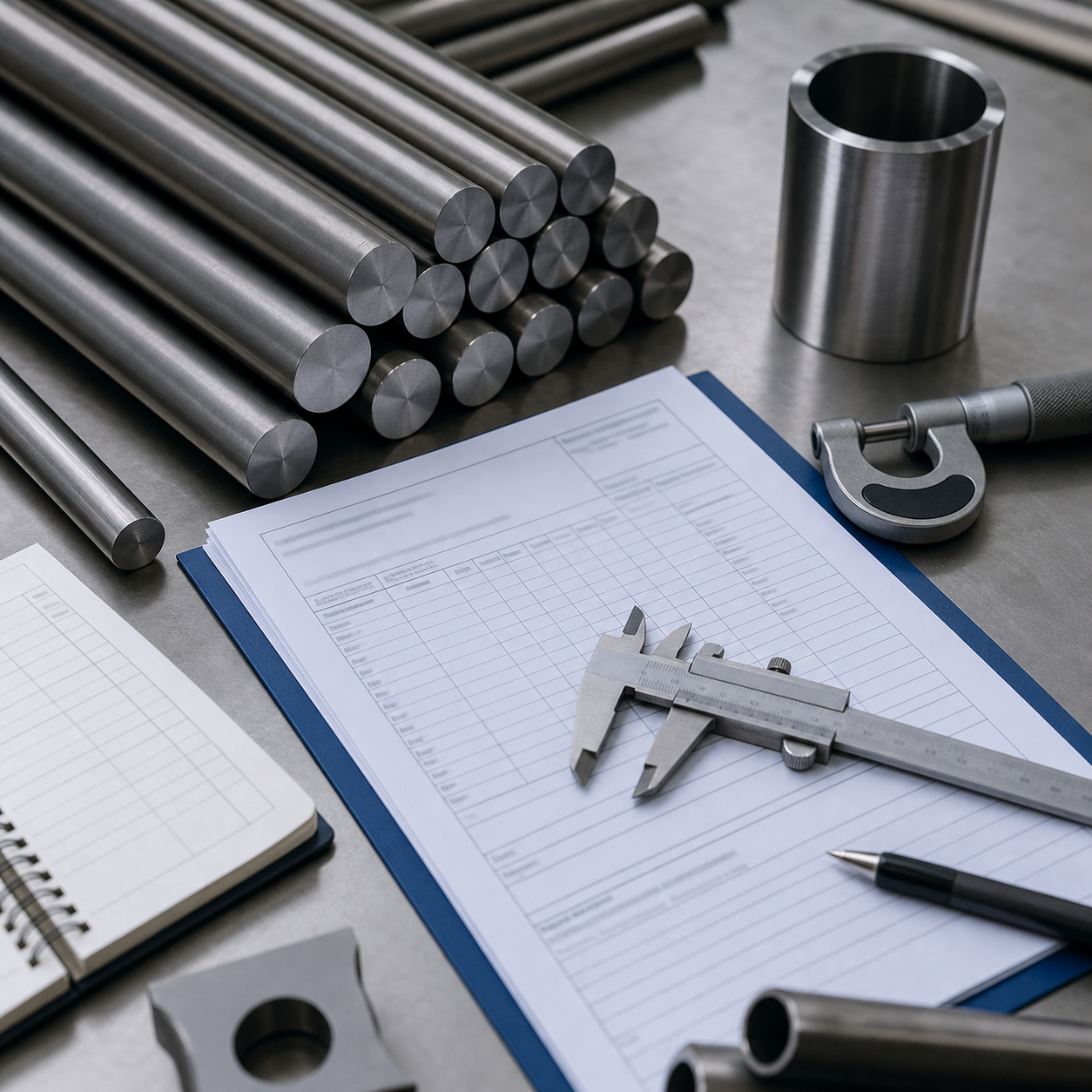
Everyday carry gear is judged in a very honest place: the pocket. A tool may look impressive on a desk, but if it feels too heavy, rusts after a humid week, scratches everything nearby, or becomes uncomfortable to hold, it slowly disappears from daily use. The best pocket gear is not always the most dramatic. It is the gear that earns its place by being ready without being noticed.
This is where titanium has built a strong reputation. From pens and key clips to pry tools, scales, flashlights, and compact hardware, titanium often makes sense by people who care about weight, durability, corrosion resistance, and material feel.
Why Titanium Works So Well in Everyday Carry Gear
Everyday carry gear is judged in a very honest place: the pocket. A tool may look impressive on a desk, but if it feels too heavy, rusts after a humid week, scratches everything nearby, or becomes uncomfortable to hold, it slowly disappears from daily use. The best pocket gear is not always the most dramatic. It is the gear that earns its place by being ready without being noticed.
This is where titanium has built a strong reputation. From pens and key clips to pry tools, scales, flashlights, and compact hardware, titanium often makes sense by people who care about weight, durability, corrosion resistance, and material feel.
In everyday carry, weight is not just a number on a product page. It is the difference between an item that comes along every morning and one that stays in a drawer. A small tool may seem light alone, but keys, wallet, phone, pen, light, and hardware quickly add up.
Pocket Weight Is Only One Part
Titanium helps reduce that burden. It offers a high strength-to-weight ratio, allowing designers to make compact parts that feel substantial without becoming heavy. This is especially useful for items that remain in a pocket, bag, or belt loop all day.
EDC gear lives in a surprisingly harsh environment. It encounters sweat, rain, hand oils, humidity, pocket lint, spilled drinks, and sometimes salty coastal air. Ordinary steels can stain or rust if neglected. Coated parts can wear at the edges and expose the base material underneath.
Titanium naturally forms a protective oxide layer that helps it resist corrosion. This makes it well suited for gear that is carried often and cleaned casually. A titanium key clip or pen may collect small marks from use, but those marks rarely carry the same concern as rust spreading under a coating.
People often talk about titanium as light and strong, but its touch also matters. Titanium has lower thermal conductivity than many common metals, so it can feel less sharply cold in winter and less aggressive against the skin. It also has a clean, dry feel that many users prefer for tools handled frequently.
Surface Wear Tells the Story
For pocket gear, this sensory detail is important. A product that feels good in the hand is more likely to be used. A product that feels awkward, sticky, or too cold becomes a decoration rather than a tool.
Titanium is not magic. It can scratch, bend under enough force, and gall if threads are poorly designed or used without care. Good EDC products still require good engineering: proper geometry, thoughtful finishing, controlled tolerances, and suitable fasteners.
But when titanium serves well, it supports a rare balance. It can make a tool lighter without making it feel disposable. It can resist the daily chemistry of pockets and weather. It can age into a practical patina instead of looking ruined after normal use.
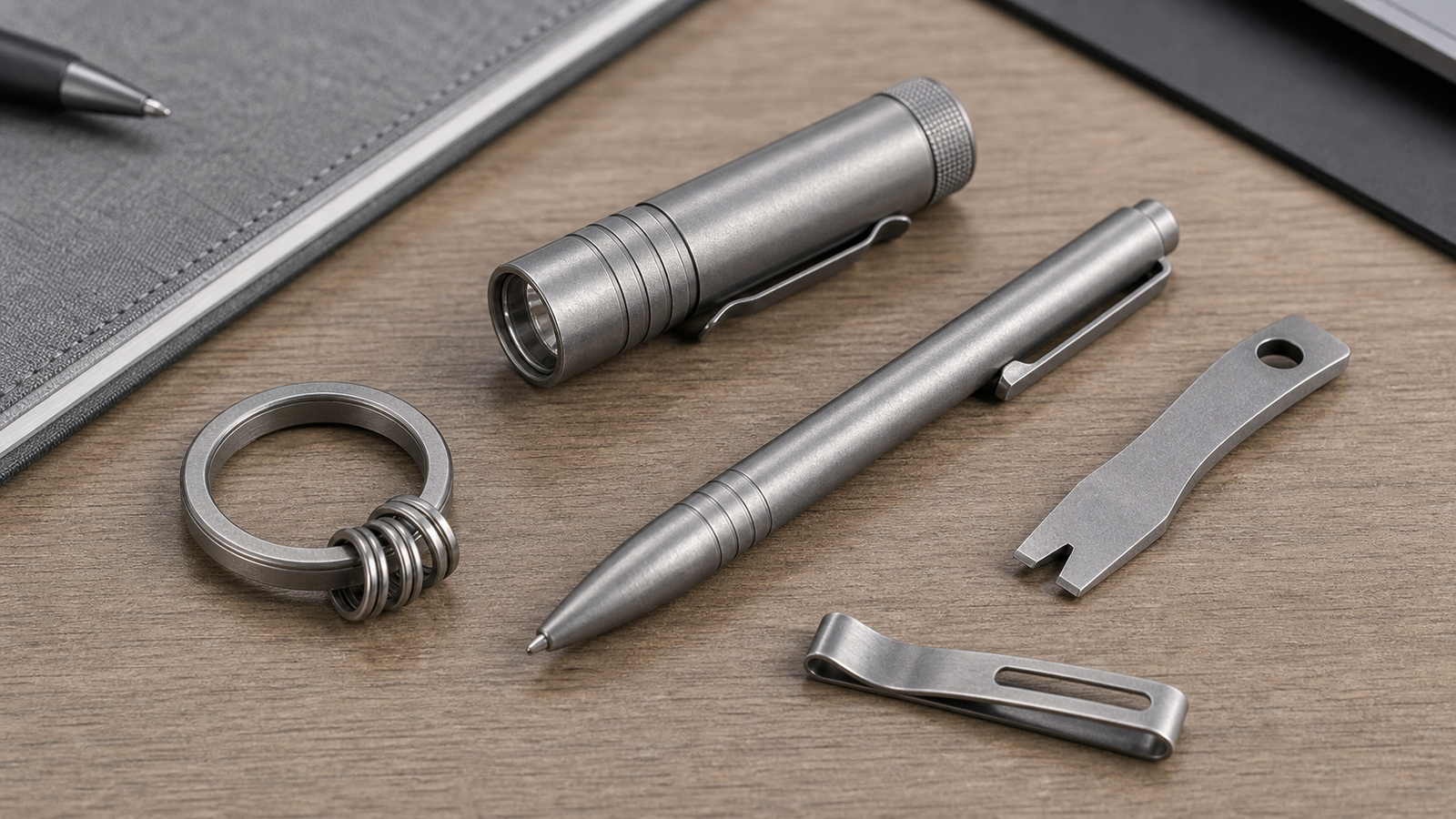
The Practical Advantages: Weight, Corrosion Resistance, and Touch
Titanium gear often costs more at first. That is the part no honest article should hide. The value appears when the object is carried for years, not weeks. If a titanium pen, clip, or small tool avoids repeated replacements and remains pleasant to use, its cost becomes easier to understand.
For people who enjoy collecting, titanium also offers a material story. For people who simply want dependable tools, it offers something more practical: fewer failures, less weight, and less maintenance.
The pocket test is simple. Does the gear disappear until needed, survive ordinary abuse, and feel good enough to carry again tomorrow? Titanium often passes because its advantages are quiet and cumulative.
It is not about making everyday carry more complicated. It is about making small tools lighter, cleaner, and more durable so they can do their work without asking for attention.
Small Edges Matter
Titanium often makes sense for premium everyday carry gear, but the material alone does not guarantee a good product. Tolerances matter. A pen with loose threads, a flashlight with poor machining, or a key clip with weak spring geometry will disappoint no matter what metal serves. The best titanium EDC products combine material quality with careful machining and practical design.
Threads deserve special attention. Titanium can gall under certain conditions, especially when similar metals rub under pressure without lubrication. Designers can reduce this risk through proper thread geometry, surface treatment, compatible hardware, and user instructions. A reliable pocket tool is built from these small engineering decisions.
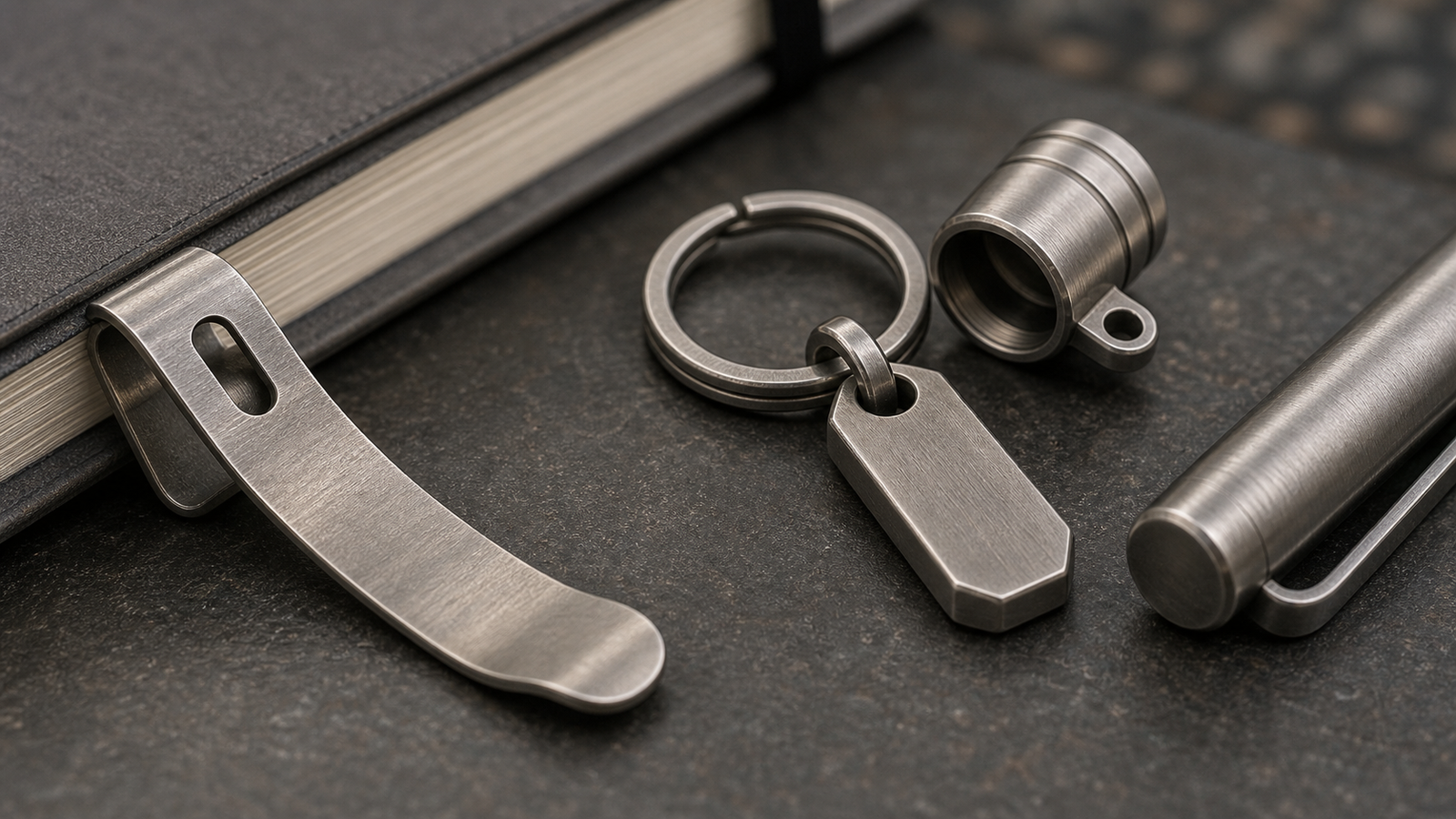
EDC gear often uses bead-blasted, stonewashed, brushed, polished, or anodized titanium finishes. Each choice creates a different relationship with wear. A polished item may look elegant when new but show scratches quickly. A stonewashed finish can hide daily marks and develop character over time. Anodizing adds color through oxide thickness, not paint, but the surface can still wear at high-contact points.
Comfort Comes From Shape
The best finish depends on the user. Someone who wants a clean office pen may prefer a refined brushed surface. Someone who carries tools with keys and coins may prefer a finish that makes scratches less obvious. Honest product descriptions should explain these trade-offs rather than pretending any finish stays perfect forever.
EDC gear spends hours near the body. It sits in pockets, clips to waistbands, rests in the hand, and sometimes contacts sweat. Titanium's corrosion resistance and clean surface behavior make it comfortable for frequent handling. It does not rust easily, and it often makes sense by people who prefer metals that feel neutral against the skin.
This is especially important for items such as watches, key clips, rings, pen grips, and small tools. A material that feels unpleasant will not be carried, no matter how strong it is. Everyday carry is personal. Comfort is performance.
Where Titanium Helps Most
Stainless steel is strong, familiar, and economical, but it can be heavy. Aluminum is very light and easy to machine, but it may dent or wear differently depending on alloy and finish. Brass and copper develop a warm patina, but they are heavier and may leave odor on the hands. Titanium sits between these options. It is lighter than steel, tougher than many lightweight alternatives, and more corrosion resistant than many traditional pocket metals.
That balance explains its popularity. Titanium does not always win on price or extreme hardness, but it performs well across the daily conditions that decide whether gear stays in rotation.
Design and Manufacturing Details That Matter
For brands and buyers, quality control should include material grade, machining tolerance, surface finish consistency, edge treatment, thread quality, and assembly testing. If the product includes screws, clips, magnets, blades, springs, or electronic parts, those components must match the promise of the titanium body.
Packaging and positioning also matter. Titanium EDC customers often appreciate technical honesty. They want to know why the product is light, how the finish will age, and what care is recommended. Clear information supports the premium nature of the material better than exaggerated claims.
The pocket is a strict testing environment. It rewards tools that are comfortable, useful, light, and resilient. Titanium succeeds because its benefits accumulate quietly over months and years of carry. It reduces weight, resists corrosion, feels good in the hand, and ages with a practical dignity.
That is why titanium remains one of the most respected materials in everyday carry gear. It does not make a tool useful by itself, but when paired with good design, it helps that tool stay useful for a long time.
Avoid Buying Only for Novelty
Everyday carry culture values materials that feel purposeful. Titanium became a premium signal because it offers performance that users can actually feel: less weight in the pocket, resistance to sweat and rain, a clean touch, and a surface that ages without looking careless. It also carries associations from aerospace, medical, and high-performance engineering, but the real appeal is practical.
A titanium pen, clip, or tool feels different because the user experiences the material every day. Unlike hidden industrial parts, EDC gear is handled constantly. This makes the tactile qualities of titanium as important as its technical data.
Many EDC products look impressive in close-up photos, but daily use exposes problems quickly. Sharp corners tear pockets. Overly aggressive textures scratch phones. Thick tools become uncomfortable. Clips that are too stiff are annoying, while clips that are too weak are unreliable. Titanium should be shaped around carry behavior, not only visual impact.
Checks Before Purchase
Good EDC design considers how the object enters and leaves the pocket, how it sits beside keys, how it behaves when wet, and how it feels during repeated use. The best pieces often look simple because unnecessary features have been removed.
Titanium can be more challenging to machine than many common metals. It has low thermal conductivity, can work harden, and may be demanding on tools if speeds, feeds, coolant, and fixturing are poorly managed. For EDC manufacturers, this affects cost and consistency.
Clean machining is visible in thread quality, edge finish, surface transitions, and part fit. Customers may not know the process, but they recognize the result. A premium titanium product should not only use premium material; it should show manufacturing discipline.
Many titanium EDC products include screws, clips, magnets, springs, bearings, blades, or electronic modules. These parts must be selected carefully. A titanium body cannot compensate for weak screws, poor springs, or unreliable electronics. The surrounding components should match the expected lifespan of the main material.
Use Over Display
For threaded assemblies, designers may use compatible materials, coatings, lubrication, or replaceable inserts to manage wear and galling. For clips, spring behavior should be tested through repeated cycles. For flashlights or electronic tools, sealing and heat management matter as much as the shell.
Titanium develops marks through use. This is not a defect, but customers should understand it. A bead-blasted finish may darken or polish at contact points. Anodized colors may wear on edges. Polished surfaces may show fine scratches. These changes can make the object more personal, but only if expectations are clear.
Brands can reduce complaints by explaining how each finish ages. They can also choose finishes that match the product's purpose. A hard-use pry tool should not be finished like a jewelry object unless the buyer understands that wear will appear quickly.
Buying, Branding, and Long-Term Support
Everyday carry gear is often small, but it can create strong attachment. A pen used for years, a key clip carried through many cities, or a flashlight trusted during travel becomes part of a routine. Titanium supports this attachment because it remains stable and pleasant through repeated handling.
That is why buyers may pay more for titanium. They are not simply buying a tool; they are buying a tool they expect to keep. The material's value grows when the object becomes familiar.
In EDC gear, premium should not mean decorative complexity. It should mean useful for longer. Titanium earns its reputation when it reduces weight, resists corrosion, feels comfortable, and supports precise manufacturing. The best titanium EDC products are not loud. They are the objects people keep reaching for because they work.
Everyday carry gear encounters more temperature change than people realize. A tool may sit in a hot car, move into a cold outdoor environment, and then warm again in the hand. Titanium handles these changes well and maintains a comfortable touch compared with more conductive metals. This matters for objects handled bare-handed in winter or after sitting in direct sun.
Small Parts Still Need Good Design
The material's corrosion resistance also helps in humid pockets and bags. Sweat, rain, and condensation can quickly mark lower-grade materials. Titanium reduces that worry, making it suitable for people who carry gear in varied climates.
The EDC audience is often detail-oriented. They notice machining marks, thread feel, clip tension, weight, finish, and whether the material claims are accurate. If a product is marketed as titanium, buyers may ask which grade serves and why. Vague claims can weaken trust.
Brands should provide clear specifications without overwhelming the customer. Material grade, dimensions, weight, finish, and care guidance are usually enough. Honest technical information makes the product feel more serious and helps justify the premium price.
Because titanium EDC gear is often purchased as a long-term object, packaging and after-sales support matter. Spare screws, replacement clips, compatible refills for pens, and clear warranty terms can extend product life. A durable body should not be retired because a small accessory is unavailable.
This is another place where design for longevity becomes real. The best titanium EDC products are supported by practical service details that keep them useful beyond the first purchase.
Conclusion: Premium Means Useful for Longer
Titanium EDC gear is often produced in small batches, limited editions, or custom runs. This makes manufacturing planning important. Material availability, machining time, finishing capacity, and quality inspection all affect delivery. A beautiful prototype does not guarantee smooth production if the process is not repeatable.
Brands should confirm tolerances, finish samples, hardware sources, packaging, and spare parts before opening large preorders. EDC customers can be patient when communication is clear, but they quickly lose confidence when specifications change without explanation.
Because titanium bodies can last a long time, modular design makes sense. Replaceable clips, screws, refills, inserts, or electronic modules can extend the life of the product. This turns titanium's durability into a practical service advantage rather than a material claim.
A tool designed for repair or refresh feels more consistent with the promise of premium materials. If the main body is built to last, the rest of the product should be designed to keep up.
Choose Gear That Stays Useful
EDC products should be tested in the conditions implied by their name: everyday carry. Clip a tool to a pocket repeatedly. Carry it with keys. Use the threads after dust exposure. Check whether edges catch fabric. See how the finish looks after normal contact. These simple tests reveal issues that polished product photos cannot show.
Titanium gives the product a strong foundation, but user trust comes from these daily details. A tool that survives ordinary annoyance gracefully is more likely to become part of a permanent carry setup.
For manufacturers, the lesson is clear: titanium should be used where the user can feel its benefits. In EDC gear, that means weight, corrosion resistance, touch, and longevity. When those benefits are obvious in daily use, the material earns its premium position.
For EDC brands, long-term trust often comes from small support choices. Offering spare parts, clear care guidance, and honest finish descriptions tells customers that the product was designed for years of use. That message fits titanium better than short-term hype.
In the end, the most convincing titanium EDC product is the one that disappears into daily life until needed, then performs exactly as expected.
Share this article

Written by : Young Things Metal Co,LTD
Follow us
Latest articles
October 10, 2026
October 10, 2026