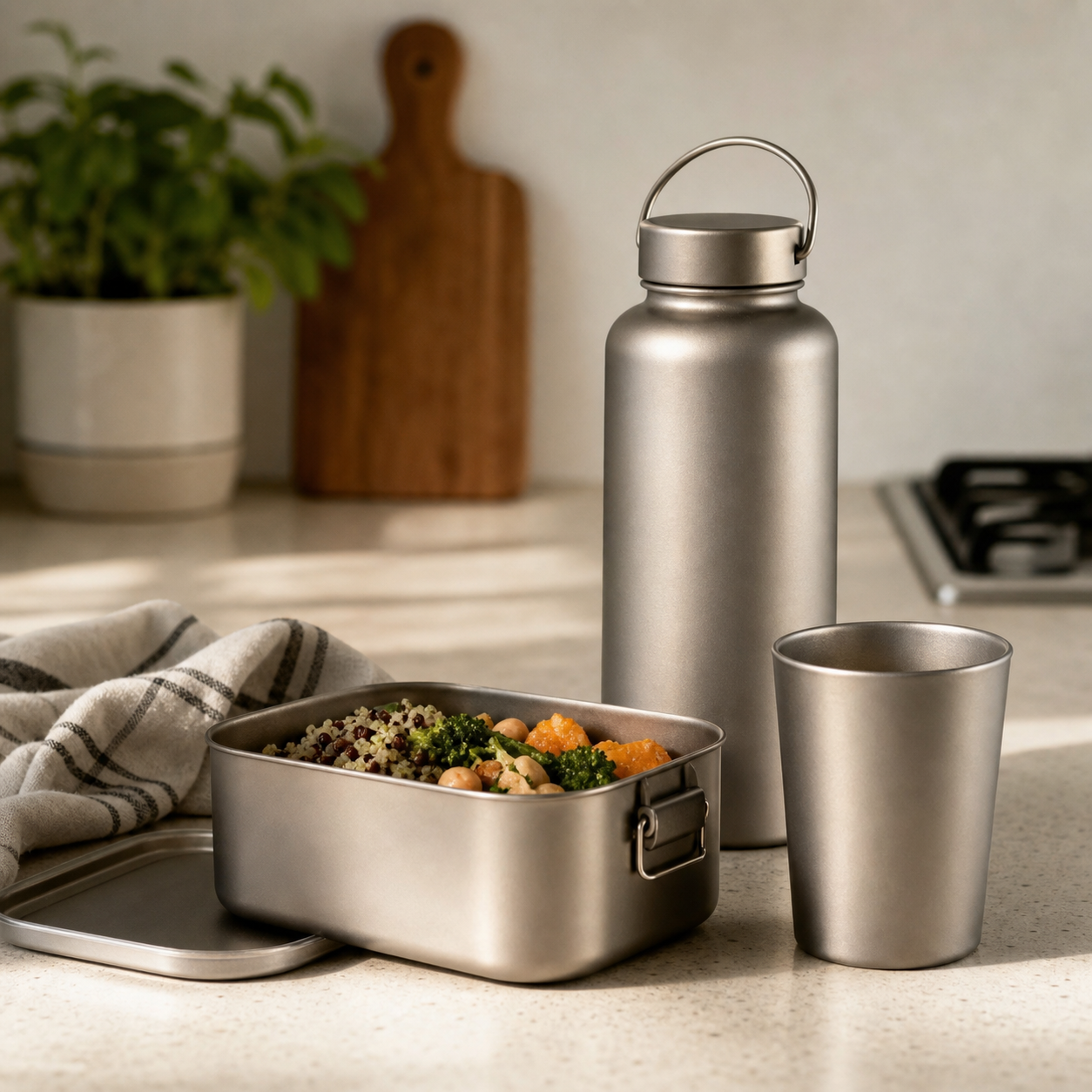
Titanium utensils are often introduced as camping gear. They are light, strong, and easy to carry, so the outdoor argument is obvious. But the more interesting story may be happening at ordinary tables: lunch boxes, office meals, travel kits, small kitchens, and families looking for cleaner, longer-lasting daily tools.
A spoon or pair of chopsticks seems simple. It touches food, hands, water, soap, heat, and storage containers again and again. Over time, small material differences become noticeable. Some utensils stain. Some hold odors. Some bend, peel, rust, or feel heavy in a bag. Titanium answers these everyday frustrations quietly.
Why Titanium Utensils Make Sense Beyond Camping
Titanium utensils are often introduced as camping gear. They are light, strong, and easy to carry, so the outdoor argument is obvious. But the more interesting story may be happening at ordinary tables: lunch boxes, office meals, travel kits, small kitchens, and families looking for cleaner, longer-lasting daily tools.
A spoon or pair of chopsticks seems simple. It touches food, hands, water, soap, heat, and storage containers again and again. Over time, small material differences become noticeable. Some utensils stain. Some hold odors. Some bend, peel, rust, or feel heavy in a bag. Titanium answers these everyday frustrations quietly.
The first thing most people notice about titanium utensils is the weight. Compared with stainless steel, titanium can feel almost unexpectedly light. That matters for hikers, of course, but it also matters for commuters, students, travelers, and anyone who carries a personal utensil set every day.
Why Table Use Is Different
Lightweight does not have to mean disposable. Titanium has a high strength-to-weight ratio, allowing a utensil to feel slim without feeling flimsy. A well-made titanium spoon or pair of chopsticks can handle routine use without the fragile feeling that often comes with thin travel products.
Food contact is where titanium becomes especially interesting. The metal is naturally protected by a stable oxide layer, which helps it resist corrosion and chemical reaction. In daily use, this means titanium does not easily rust and does not rely on a coating that can wear away.
For utensils, neutrality matters. A good utensil should not add taste to rice, tea, soup, fruit, or coffee. It should not hold yesterday's seasoning after washing. Titanium's clean surface behavior is one reason people describe it as pure or quiet in use. It does not compete with the food.
Reusable utensils are only practical if they are easy to clean. Titanium handles repeated contact with water, mild detergents, and changing temperatures well. It does not need paint, plating, or a delicate surface layer to stay useful.
This is different from many coated or low-cost alternatives. Once a coating scratches or peels, the object becomes harder to trust. Titanium can scratch too, but a scratch is usually a mark in the metal rather than the failure of a separate layer.
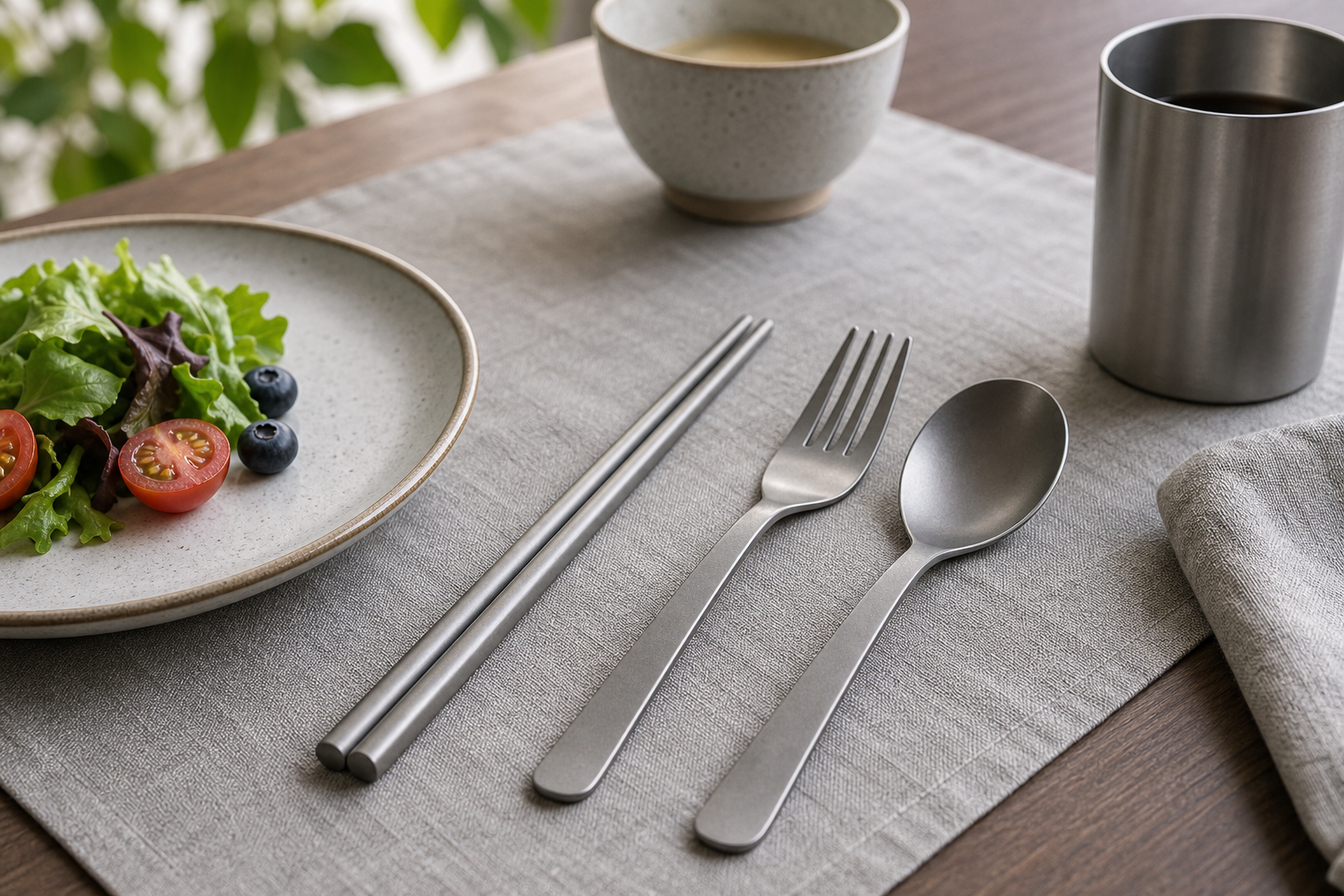
Material Benefits at the Table: Weight, Cleanliness, and Comfort
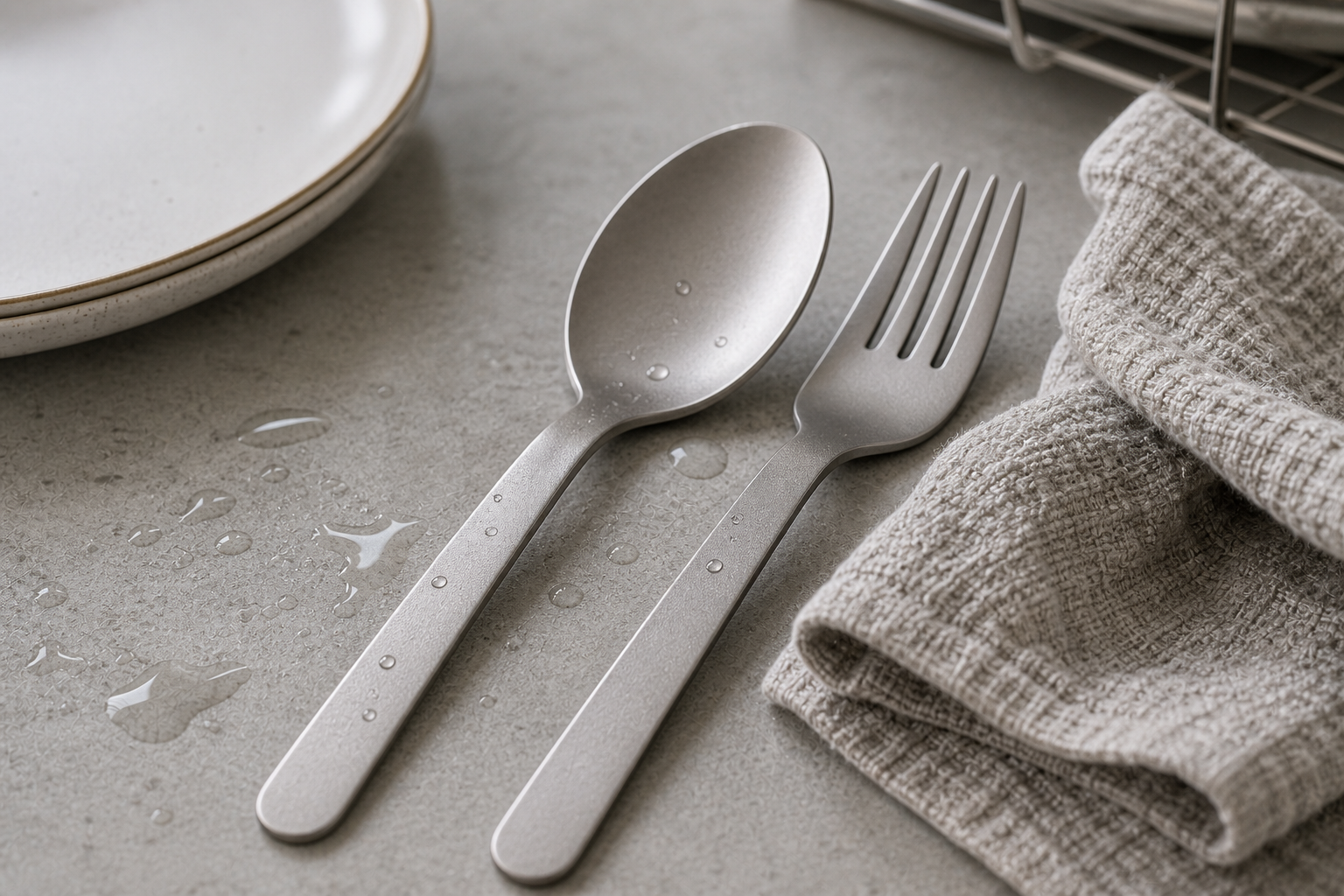
Material science is important, but people choose daily objects partly by feeling. Titanium has a distinctive touch: light, clean, slightly warm compared with more conductive metals, and often softly matte when brushed or sandblasted.
That tactile quality can make a small utensil feel more intentional. It is not flashy luxury. It is the kind of design value that appears during repeated use: the utensil is easy to pack, pleasant to hold, and still dependable after many meals.
Disposable cutlery is convenient, but convenience becomes waste quickly. Reusable utensils are better only when people actually want to carry and clean them. Titanium helps because it removes some common excuses: it is not heavy, it does not corrode easily, and it does not feel temporary.
The most sustainable product is often not the one with the loudest claim, but the one that remains useful long enough to prevent replacements. A titanium utensil set can become one of those ordinary objects that simply stays in rotation.
Clean Contact Matters
Titanium utensils make sense beyond the campsite because the same properties that help outdoors also help at the table. They are light, clean, corrosion resistant, and durable without relying on fragile coatings.
For people building a simpler daily kit, titanium offers a practical kind of refinement: less weight, less waste, and fewer small compromises around food.
Titanium utensils can be polished, brushed, sandblasted, anodized, or finished with a combination of treatments. Each finish changes the way the utensil looks and feels. A polished spoon may feel smooth and bright, while a sandblasted handle may provide a softer grip. Anodized colors can help identify personal sets without adding paint or a coating that flakes away.
For chopsticks, texture is especially important. Too smooth, and they can feel slippery with noodles or vegetables. Too rough, and they become unpleasant against the lips. Good design finds the middle ground: enough grip for function, enough smoothness for comfort, and clean edges that do not distract from the meal.
Weight Without Fragility
The campsite made titanium famous, but daily travel may be the larger opportunity. People who bring lunch to work, eat between meetings, or travel frequently need utensils that are light, clean, and easy to pack. A compact titanium set can stay in a bag without adding much weight, and it can be washed and reused without the disposable feeling of plastic.
This matters because sustainable habits depend on convenience. If a reusable utensil set is heavy, bulky, or hard to clean, it may be left behind. Titanium removes some of that friction. It turns a good intention into something practical enough to repeat.
Consumers increasingly ask what touches their food. Titanium's reputation for biocompatibility and corrosion resistance helps answer that concern, but product quality still matters. Buyers should consider the titanium grade, surface treatment, edge finishing, cleaning method, and whether any non-metal parts are included in the set.
For brands, this is an opportunity to be clear rather than dramatic. Explain that titanium is lightweight, corrosion resistant, and chemically stable in ordinary dining use. Avoid exaggerated health claims. Customers trust products more when the explanation sounds practical and verifiable.
Design Details That Shape Daily Use
A utensil looks simple until it serves every day. The bowl depth of a spoon affects soup and rice. The taper of chopsticks affects grip. The length of a fork affects comfort. The thickness of an edge affects how it feels in the mouth. A good titanium utensil should be light, but not so thin that it feels sharp or unstable.
Packaging also matters. A reusable set needs a case or pouch that dries easily and does not trap odor. If the product is intended for travel, the set should be compact but not awkward. If it is intended for home dining, the appearance and hand feel may matter more than extreme weight savings.
Titanium utensils require little special treatment. Wash them after use, dry them before long storage, and avoid abrasive abuse if a bright finish is important. Scratches may appear over time, especially on polished surfaces, but they do not usually affect function. For many users, those small marks become evidence of a tool that is actually used.
What Daily Handling Shows
Compared with coated utensils, titanium offers a reassuring simplicity. There is no painted layer to peel and no plating that defines the product's life. The utensil is essentially the material itself, shaped for daily contact with food.
Titanium utensils are not only outdoor accessories. They are small daily objects that benefit from the same material strengths valued in more demanding industries: low weight, corrosion resistance, stability, and durability. Used at the table, in an office, or on the road, they make reuse easier without turning it into a burden.
That is the quiet value of titanium dining tools. They help people carry less, waste less, and keep one reliable set close at hand.
A titanium utensil set for backpacking is not the same as a titanium utensil set for an office lunch bag. Backpackers may prioritize the lowest possible weight and a compact shape. Office users may care more about hand feel, appearance, and a protective case. Families may want rounded edges and easy cleaning. Restaurants or gift brands may focus on finish consistency and packaging.
Surface Care After Washing
This means the product brief should begin with the user. A spoon designed only to be ultralight may feel too thin for daily dining. Chopsticks designed only for elegance may be too slippery for travel use. Good titanium utensil design balances weight, comfort, grip, and durability for a specific routine.
Small details matter because utensils touch the hand and mouth. A spoon edge that is too sharp feels cheap. Chopsticks with poor taper feel clumsy. A fork that is too short may be awkward, while one that is too long may not fit a travel case. Titanium allows slim forms, but slim should not mean unfinished.
Balance is also important. A utensil that feels good in the hand often has carefully considered thickness distribution. The user may never describe it technically, but they will notice whether the product feels natural. This is where manufacturing experience shows.
Choose for Repeated Use
Reusable utensils spend much of their life in cases, bags, drawers, and lunch boxes. The storage design should allow drying and easy cleaning. A sealed case may protect a spoon from dirt, but if it traps moisture or odor, the set becomes less pleasant. Fabric pouches, ventilated cases, and simple washable containers can all work depending on the target user.
Titanium's corrosion resistance helps, but hygiene still depends on design and habits. Clear instructions about washing and drying are useful. A reusable product becomes successful when the whole routine is easy enough that people actually repeat it.
Wholesale, Branding, and Retail Considerations
Titanium utensils are often marketed with dramatic language, but the better argument is quieter. They are light, strong for their weight, corrosion resistant, food-contact friendly, and long-lasting. Those claims are enough. Overstating the material can make the product feel less credible, especially for customers who understand metals.
Brands can tell a stronger story by showing real use cases: commuting, travel, camping, school lunches, office meals, and low-waste living. Practical images and clear specifications often persuade better than exaggerated promises.
For wholesale or private-label buyers, consistency is crucial. Color, finish, edge polish, logo marking, weight, packaging, and case fit should remain stable across batches. A single sample may look good, but production control determines whether hundreds or thousands of sets meet the same standard.
Buyers should request pre-production samples, confirm packaging, define acceptable finish variation, and inspect early batches carefully. Titanium is a premium material, so customers will expect premium consistency. The manufacturing process should support that expectation.
When Titanium Makes Sense
Stainless steel remains a strong choice for many utensils. It is familiar, affordable, and durable. Plastic is lightweight and inexpensive but often feels temporary and raises waste concerns. Titanium sits in a more specialized position. It is lighter than stainless steel, stronger and longer-lasting than many plastic options, and resistant to corrosion without coatings.
The choice depends on context. For a cafeteria, stainless steel may be more economical. For disposable convenience, plastic is common but wasteful. For a personal reusable kit that someone carries every day, titanium offers a convincing balance of weight, cleanliness, and longevity.
The success of reusable utensils depends on whether people want to keep using them. Titanium helps because it makes the set light enough to carry, durable enough to trust, and clean enough to enjoy at the table. It turns reuse from a moral reminder into a simple habit.
A Practical Dining Tool
That is why titanium utensils have a place beyond outdoor gear. They fit modern routines where people move between home, work, travel, and leisure while wanting fewer disposable objects along the way.
Many titanium utensils are sold as branded travel sets, outdoor accessories, or premium gifts. Logo marking can be done through laser engraving, etching, printing on packaging, or subtle surface treatment. The marking method should match the finish and expected use. A logo that wears off quickly can make the product feel cheaper than the material deserves.
For private-label orders, buyers should confirm logo size, placement, contrast, durability, and sample approval before mass production. Titanium's surface can look refined, but it also reveals careless marking. Subtle branding often works better than heavy decoration.
Food-contact products may need documentation depending on the market where they are sold. Buyers should consider material declarations, food-contact testing, packaging labels, and care instructions. Titanium is widely trusted, but a finished utensil set still needs to meet the requirements of the sales channel.
Retailers may also ask for barcode labels, warning statements, country-of-origin marking, and packaging durability. These details are not exciting, but they are part of turning a good product into a sellable product. A supplier who understands them can save the buyer time.
Conclusion: Reusable Dining Tools That Are Easy to Keep Using
Titanium utensils can support a brand story around lighter travel, cleaner daily habits, and longer-lasting products. The story should stay close to real advantages. Show the utensil in a lunch bag, on a hiking table, beside a travel bottle, or in a minimalist kitchen kit. Practical scenes make the material easier to understand.
When the story is grounded, titanium feels less like a luxury gimmick and more like a sensible upgrade for people who use the same tools every day.
Simple care instructions help customers keep titanium utensils in service for years. Wash after use, dry before storage, avoid harsh abrasives if appearance matters, and understand that small surface marks are normal. These instructions are not complicated, but they make the product feel honest.
For brands, care guidance also reduces unrealistic expectations. Titanium is corrosion resistant and durable, but it is still a real material used in real life. Explaining how it ages can turn scratches from a complaint into part of the product's long-term character.
A Quiet Advantage at the Table
Reusable dining tools fit broader changes in travel, work, and consumption. More people carry bottles, lunch boxes, and compact daily kits. Titanium utensils sit naturally in that shift because they solve a practical problem: how to carry something clean and durable without adding weight.
For utensils, the value is often in the complete set rather than a single spoon or pair of chopsticks. Buyers should consider how each piece fits together, whether the case is easy to clean, how the set is displayed online, and whether replacement pieces can be ordered later. A coherent set feels more premium than a collection of unrelated parts.
This matters for titanium because customers expect the material to feel intentional. Consistency in finish, shape, and packaging helps the product justify its higher price.
For end users, the decision is simple: a utensil set should be easy to carry, easy to clean, pleasant to use, and durable enough to keep. Titanium supports all four goals, which is why it fits both outdoor kits and ordinary daily routines.
For buyers comparing samples, repeated handling is the best test. Put the utensil in a bag, wash it several times, use it with different foods, and check the case after drying. Titanium's strengths become clearest when the product is judged as part of a real daily routine.
Share this article